
Blog / Service

Blog

All Service News New Inventory Community Events Fleet Parts Social Green Ford Information Body Shop Grand Rapids Ford Dealer People Finance Pre-Owned Inventory

Borgman How To: Understanding Your Vehicle's Braking System

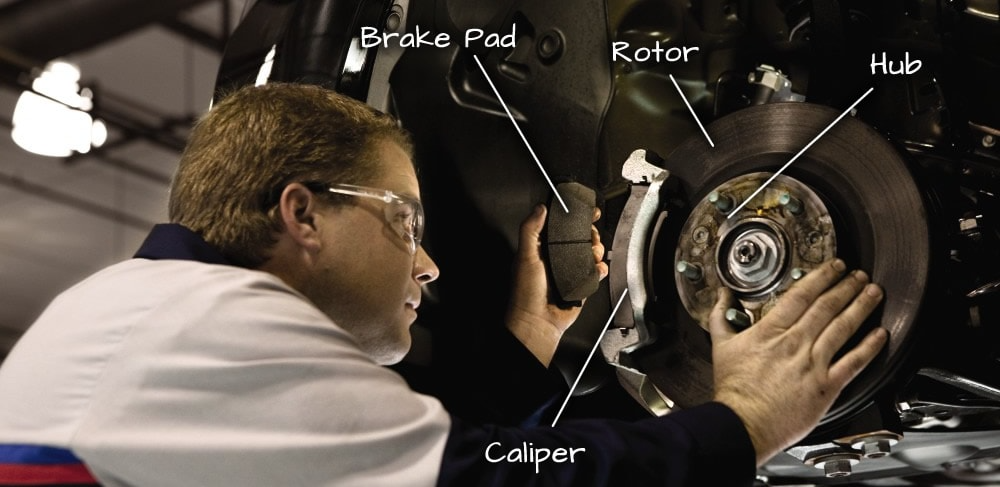
The Borgman Service Center - Your Home For Expert Brake Service in West Michigan Brakes do an awful lot of work, even on a simple trip around Grand Rapids or to the grocery store. Bringing a moving vehicle to a complete stop is no small feat, even though we may take it for granted. On the other end of that brake pedal are some clever feats of engineering that harness the power of hydraulics and friction to turn a vehicle's kinetic energy into heat. The Borgman Service Center in Grand Rapids is your home for making sure your brakes and other systems within your vehicle are properly functioning and maintained. In our latest Borgman How To, we'll give you a general idea of how this system works and enough insight to know when it's losing performance. Here's the "Brake-Down" of major components: Hydraulic Components: The two main components connected to the brake pedal are the Master and Slave Cylinders, which compress fluid to multiply the force from the brake pedal. The fluid is distributed to the vehicle's wheels to power the brakes. Disc Brake Components: Disc brakes are very common on the front wheels because of their efficiency. They consist of a rotor, calipers, and pads with an open design to quickly dissipate heat. Drum Brake Components: Drum brakes are very common on the rear wheels because of their durability. They consist of a metal drum that spins with the wheel, and shoes that press against the insides. They require much less maintenance and are often used for the emergency brake. Hydraulic Braking System Basic Components Hydraulics are based Pascal's Principle: "Pressure exerted on a fluid is distributed equally throughout the fluid." This is possible because fluids don't compress the same way gasses do, enabling you to press down gently on a brake pedal and have that small amount of pressure affect all of the fluid in the system. It is then multiplied and used to stop the entire vehicle. The system you'd find in a New Ford or Mazda is more complex than this example, but here's a rundown of the basics: When you use the brake pedal, it pushes on a plunger in the master cylinder, building pressure. Brake fluid is forced through the plumbing to the 4 wheels of the vehicle, where slave cylinders further amplify the hydraulic force. This fluid then actuates pistons in the brakes with enough force to create enough friction to stop the wheel. Modern systems also use enhancements like a "brake booster" which uses vacuum to assist with compressing the master cylinder. This whole hydraulic system is responsible for stopping the vehicle and therefore your safety and those around you, so it is common to see redundancies like two master cylinders. If you notice your brake pedal feeling spongy or needing more pressure than usual, check your brake fluid level and schedule an appointment. Note on Brake Fluid: If you do your own fluid checks, and we highly recommend that you do, you might notice low brake fluid. A little fluid loss is normal as the pistons in the calipers extend with wear (the system is actually just getting bigger) but a dramatic loss usually points to a leak. While hydraulic theory applies to most liquids, brake fluid is specially-formulated for vehicles. It is hygroscopic, meaning it absorbs moisture, and this is to make sure the boiling point stays high (fluids boil under pressure) and that water cannot pool in the brake system. If you open a bottle of brake fluid and don't use all of it, seal it up tightly and write the date on the bottle. It's already started absorbing water from the air, so you'll want to use it in 3 to 6 months or throw it away. The Difference Between Disc & Drum Brakes Disc brakes, the ones you'll interact with most, are often found on the front wheels because they're more heat-efficient and easier to service. Here, pressurized fluid from the slave cylinder squeezes down on the rotor through the caliper pistons. The rotor is attached to the wheel and spins, but the caliper is mounted to the vehicle itself. Brake pads are fixed to the inside of the caliper and are made of high-strength and heat-resistant materials like ceramic or carbon. As they squeeze down to the spinning rotor, they generate enough friction to slow the vehicle. On the front wheels, brakes have to work harder and can reach temperatures of over 900°F. Disc brakes work best here because they cool much faster than drums - thanks to their open construction. The pads wear faster, but they're much easier to replace. Drum brakes are built differently. Instead of a rotor, a metal drum houses a series of shoes that push against the rotating edges from the inside. Their construction is more durable, but they tend to trap heat so they're often only used on the rear wheels. If the shoes (different type of pads) are heated well above 900°F, they lose their "grippiness" - colloquially called heat fade - and the vehicle may not be able to stop. Thankfully, the rear brakes are doing much less work than the front, and this is by design. As the weight of the vehicle shifts forward while stopping, too much braking force in the back can lock up the rear wheels and cause them to skid. The master cylinder sends less force to the back to counter this, making the rear brakes more supplemental than active. However, the emergency brake is usually connected to the back wheels, so it's important to have them inspected - even if they don't need service as often. Need Your Brakes Inspected or Replaced? Visit The Borgman Service Center in Grand Rapids! If you're hearing a squealing noise when you stop, that's a metal tab rubbing against the rotor letting you know it's time to visit the Borgman Service Center in Grand Rapids. Our highly-trained and certified technicians will make sure that any maintenance on your brakes is performed properly, and keep an eye on connected components for faults - so you can get back to exploring West Michigan safely. During your visit, be sure to ask the Borgman Quick Lane staff about the Lifetime Brake Pad Guarantee. Now whenever you need new brake pads, we'll waive the part cost and replace them with dependable, long-lasting Motorcraft pads for as long as you own the vehicle. You can browse the latest Service Specials, Schedule an Appointment online, or Contact Us with any questions you may have. Come see why Borgman is the Best in the West!
Borgman How To: Tire Rotation & Balancing Explained

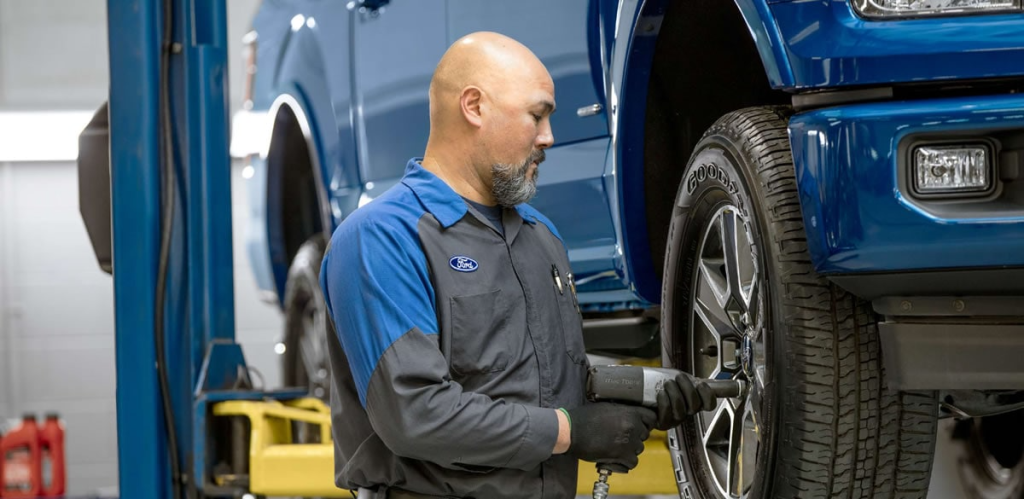
As crews around Grand Rapids work to patch up our numerous potholes, the best way to protect your tires from cracks, splits, and other shock-related damage is to rotate them regularly and keep them properly inflated. From the outset, the concept of a tire seems pretty simple. Their rubber construction and treads grip the road in many different driving conditions. They're filled with air to act as a cushion, push back onto the road, and keep wheel weight down - and therefore fuel efficiency up. In truth, there's a bit more going on here. In our latest Borgman How To, we'll expand upon our previous Tire Article and go over why it's important to keep your tires balanced and rotated. What a Tire Rotation Is and How It Saves You Money Here's a scenario: about a year ago you put four brand-new tires on your car. You notice that the rear tires still look fairly new, but the front ones, especially on the edges, look a little more worn. Instead of replacing the front tires, you can simply have them moved to a different position on the car, or rotate them. Generally, your front tires wear faster than the rear ones because they're doing a lot more work. All of the turning, braking, and acceleration (in a front-wheel drive car) happens here, and the rear wheels are more-or-less just along for the ride. Front tires also feather on the edges from turning, so rotating wears them in a different place and grants you thousands more miles out of them. Plus, it reduces the risk of blowing a tire due to concentrated wear on specific areas. A fringe benefit of having this done on a regular basis is that our technicians can keep an eye on your brake and suspension components for wear. With the wheels off, they'll be able to spot hidden issues before they cause expensive problems or make the vehicle unsafe. Removing the wheels also allows a thorough inspection of the tire itself. It can be looked over for cracks, pits, or bulges - all of which will need some sort of intervention. It also makes things like cupping or bald patches much easier to spot, which almost always point toward an issue with your alignment. What Does It Mean To Have Your Tires Balanced? The term 'tire/wheel balance' is pretty self-explanatory. Because tires and rims are not perfectly round, they need to be adjusted on a special machine to counteract any uneven weight distribution. A tire can have a static imbalance (up and down) or a dynamic imbalance (side to side,) and both will generate vibration and road noise. Unbalanced tires can also contribute to uneven tire wear and put stress on other components, like your axles. We can check for this when we do a rotation or adjust your alignment and will attach weights to precise locations on the wheels as needed. Bonus: How to Change A Flat Tire Learning to change a spare tire is something best learned in the daylight and in your own driveway, rather than out of necessity on the side of the road. Your tire removal procedure may be found in your owners manual, but there are a few things that can help make the process easier, and a couple of safety tips too. First, find a safe, level area to pull over and place reflective warning markers near your vehicle to alert other drivers. Before you raise the vehicle, use the wrench to 'crack' the lug nuts loose while the tire is still on the ground. Sometimes it takes a lot of force to do this and if the vehicle is raised you'll only spin the wheel - and run the risk of the vehicle falling off the jack. Once the lug nuts are loosened a little bit, begin to raise the vehicle, consulting the owner's manual for lift points and proper jack procedure. Now you may fully remove the lug nuts and the wheel. Place the spare wheel back on the posts and replace the nuts following a star pattern. If you repeat this pattern gradually, you ensure that the wheel is evenly affixed to the hub. A severely dynamically unbalanced wheel can work the lug nuts back off while you're driving! After the wheel is back on and the lug nuts are snug, lower the vehicle and use your wrench to tighten them down a little further. Spares are not designed to be driven around at high speed or long distances, but if you don't have another choice, be sure to stop and check that the lug nuts remain on there tight - the wheel can settle a bit as it's driven and needing to tighten the lug nuts again is normal. Visit the Borgman Ford Service Center for Complete Tire Care in Grand Rapids! Whether you need your tires rotated, balanced, or replaced, the Borgman Ford Service Center is here to help. Our highly-trained and certified staff will make sure that your tires are in proper working condition, are balanced, and installed correctly. We'll also inspect different parts of your vehicle while you're here to keep an eye on its overall health. You can check out our latest Service Specials, Schedule an Appointment Online, or Contact Us with any questions. Remember to check your smartphone's app store for the Borgman Service Rewards App and get a Free Oil Change on your 5th visit! Come see why Borgman is the Best in the West!
Borgman How To: When Is It Time For New Shocks or Struts?

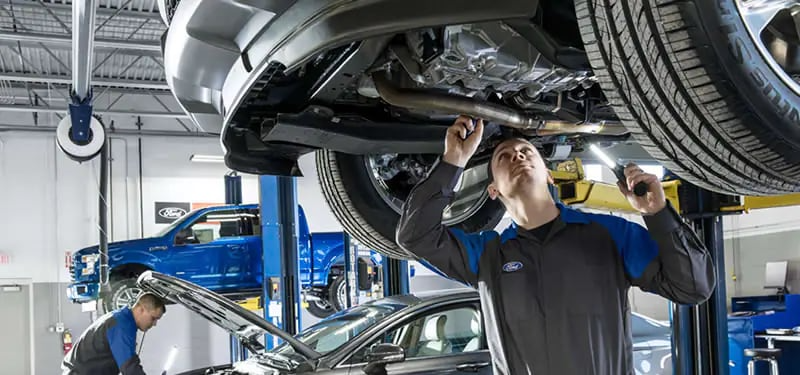
Shock & Struts Smooth Your Ride and Keep West Michigan Drivers Safe After the West Michigan winter finally clears, you might notice that your daily commute is a little bumpier than you remember, or that it's a little harder to turn the steering wheel. If that's the case, it could be a sign that you need new shocks or struts, and the Borgman Service Center is here to help! What Are Shocks & Struts? What Do They Do? Depending on which vehicle you drive, it will be equipped with either shock absorbers, struts, or both. It's worth noting that a single wheel will have one or the other - never both. Shocks and struts are parts of your vehicle's suspension, and they control how your body interacts with the wheels. This affects your steering, stopping distance, and weight dynamics. They also filter out bumps from the road and smooth out your ride. While these two parts have similar duties, they are not interchangeable. Here's the main difference: a strut is an integral, structural part of your suspension, and a shock is not.?A shock, or shock absorber, is a pair of interleaved metal tubes that extend or shrink at a controlled rate, forcing the wheels to move or "travel" smoothly when going over a bump. It does this by squeezing oil through its own internal valves. Think of it like a bicycle tire pump that you can only go up and down at certain speeds. What this does is make sure that you don't feel every single bump in the road, and that your wheels are held firmly to the pavement to maintain traction. Without them, you're in for a very bumpy ride and your steering gets a bit sloppy. A strut, properly called a strut assembly, consists of a shock absorber (the actual strut) with mounts for the different suspension parts, and a huge spring at the top to hold up the body and chassis. A strut is functionally similar to a shock, except that it's designed to completely support the vehicle and tie all the suspension parts together. Without them, your vehicle would sit the ground and wouldn't be able to move. How Do I Know When It's Time For New Shocks or Struts? We don't really notice our suspension until there's an issue, but these unsung heroes can travel up and down a million times during their lifespan. If you're cruising along and you feel like you're riding in a bowl of jelly or on an old bumpy roller coaster, it's definitely time for new shocks or struts. However, sometimes the signs aren't as obvious. Here are a few things you can check for: The Bounce Test. Place your hands on the fender directly above the wheel and press the body down. Now let go and watch carefully. Your vehicle should rise back up and stop. If it bounces, your suspension needs to be inspected. This can give you vital clues but isn't an end-all-be-all test. How's Your Steering? If you feel like it's a little harder to turn the wheel, but your power steering is ok, it could be related to your suspension. Worn out shocks or struts also contribute to that "floaty, loosey-goosey" feeling when turning or going over a bump. The Brake Test. As we know, objects in motion stay in motion unless acted upon. If you think of your wheels and body as two separate objects, that means if one stops the other needs to be acted on to stop too. That's a big part of what your suspension does. Go to an empty parking lot, pick up a little speed and brake hard. If you feel like you're in a nose-dive, or your rear end bounces a bit, there's a suspension issue that needs to be addressed. Check Your Tires. Uneven tread wear or bald spots on your tires are a good indicator that there's something wrong with your suspension. It could be that worn shocks or struts are allowing the tires to wander around, but it could also mean you just need an alignment. For the mechanically inclined: Strut replacement should be done by a professional, and the biggest reason for this is safety. Without the proper tools or knowledge, removing the coil spring from the strut is extremely dangerous, and it could happen by accident. The second reason is that you will need an alignment afterward. While it's not impossible to do yourself, it's not fun and we have the know-how and equipment to do it quickly and accurately. What's The Benefit to Having Shocks or Struts Inspected Regularly? The big thing about having your suspension parts inspected is safety. With a well-maintained system, your input on the steering wheel is much tighter and your stopping distance shortens dramatically. Your traction in bumpy or slippery conditions is much better too. This helps you keep control of the vehicle if you need to stop suddenly. If shocks or struts are neglected, they can cause other serious problems in the long run. If your wheels aren't being held in place very well, your tires and the bushings in your suspension parts feel it the most. You might notice some bald spots on your tires from bouncing around or worse, the coil can rub against the tire and slice the inside sidewall. Bushings are little rubber donuts that help reduce vibration where suspension arms link together. Lots of movement will wear these down faster, and without them, the suspension parts will start to damage each other. Visit Borgman Ford in Grand Rapids for Shock or Strut Inspection or Repair If you think it's time for some new shocks or struts on your vehicle, or if something just doesn't feel right anymore, bring it into the Borgman Ford Service Center. Our highly-trained service technicians inspect your shocks or struts for leaking, dents, bends, or other more subtle signs of wear. You can easily Schedule an Appointment online or Contact Us to set one up or if you have any questions. Come see why Borgman is the Best in the West!
How To Know If Your Vehicle Needs An Alignment

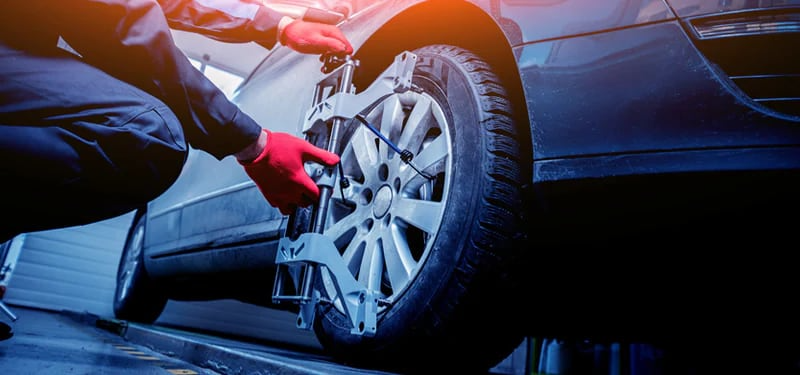
Now that we've made it about halfway through the winter season in West Michigan, it's probably a good time to know where you stand in terms of your vehicle's alignment. I don't think anyone was surprised to find the roads an absolute horror show after the latest thaw, as we were reunited with our old friend the pothole. These gaps, pits, or large craters in the asphalt are formed when water seeps into cracks and expands when it re-freezes. While your vehicle will eventually need an alignment from normal driving, if you hit a pothole or a curb it may need one sooner. Simple Things To Check Before You Bring Your Vehicle In Whether you drove through a pothole recently or not, you might notice your vehicle pulling to one side, vibrating or shaking on the highway, or just feeling a little squirrely on turns. These are all signs that something isn't quite right and should be checked out. Before you bring it in though, look and make sure your tires are properly inflated, as this might clear up the issue if they are not. Also, during the winter, check and make sure your wheel wells aren't caked with snow and ice. Shaking on the highway could just be some ice caught in your rim and throwing the wheel off-balance. Snow buildup behind the wheels can make the steering feel different too. An hour or two in a warm garage will clear these issues up no problem. What is a Wheel Alignment? When your vehicle was manufactured, the wheels were adjusted a certain way for optimal performance, stability, and tire life. This is your alignment, and there are three different measurements at play here: 1. Camber: This is the angle at which your tires meet your vehicle vertically. It's easier explained using the top of the tire - if it's closer to your car (tipping in) than the bottom, then you have a negative camber. 2. Toe: To best describe this, look down at your feet. Point your toes out like a duck, or in towards each other. Adjusting your tires' toe follows the same basic concept, and is the root of most alignment issues. 3. Caster: This is a measurement of the steering axis, and is almost never adjusted. However, it is related to your alignment and worth mentioning. How Do I Know If My Alignment Is Off? The signs of a poor wheel alignment usually aren't subtle, especially if you do a lot of highway driving. However, having a skilled professional take a look once a year will ensure that this easily-corrected issue doesn't turn into a big expensive one. Here are a few things you can watch out for: Vibrating, shaking, or wobbling - especially at high speeds Pulling to the left or the right Tires wearing down unevenly Crooked steering wheel when going straight Something just feels "off" - especially when turning Why Properly Aligned Wheels Are Important Wheel Alignments serve a few different purposes, and the biggest one is safety. Properly aligned wheels are tuned to how the manufacturer intended, and the tires to interact with the road in the way they have determined is the most stable and predictable. This is most important in heavy rainstorms or during the winter. Schedule Your Next Wheel Alignment with Borgman While there are a number of routine maintenance tasks you can do yourself with a little know-how, a wheel alignment should not be one of them. We have the proper facility, specialized tools, and highly-trained professionals to align your wheels to your vehicle's spec with pinpoint accuracy - ensuring your safety and the longevity of your tires and suspension. Our technicians can also spot other issues while doing this, such as worn out bushings, tie rods, and other simple repairs that can be done before a tow truck gets involved. If you need an alignment, or just want to have it checked by a certified and trusted technician, give us a call at 616-534-7651, or schedule an appointment online. Be sure to visit our Service Specials page for the latest coupons and offers. Drive safe, West Michigan!

Borgman How To: Pre-Winter Windshield Wiper Check & Maintenance

How To Inspect Your Wiper Blades Before The West Michigan Winter Hits During the warmer months, we only really use our wipers during a rainstorm or cleaning gunk off of the windshield. However, once the snow flies, making sure wipers can do their job becomes more of a safety issue. At the very least, worn wiper blades will make a lot of horrible noise and leave streaks on the windshield. When they get really bad, and especially during a snowstorm, they leave you with little to no visibility in an already precarious driving situation. When wipers are in good shape, they will smoothly and quietly remove all water from their path. Checking your wipers for wear is pretty easy. Just pick it up and take a look for any ripples or cracks in the rubber. If you don’t see any glaring issues, sit behind the wheel and spray the windshield with washer fluid. When the wipers engage, keep an eye open for the following issues: Wipers do not clear all of the washer fluid in one stroke or leave streaks. Wipers make a lot of noise, even when wet. Wipers bounce up and down or stutter as they travel – indicating that some part of the assembly is bent. Windshield wipers should ideally be replaced every six months. However, if you’re looking for an easier way to tell if your wipers need replacing, visit the Borgman Ford Service Center and ask about Motorcraft Wiper Blades with wear indicator. These wiper blades have a spot that will change from black to yellow when they need to be replaced. Good Windshield Wiper Habits For West Michigan Weather Wiper blades are a relatively low-maintenance feature of your vehicle, but there are a couple of things that will wear them down faster: Operating while the wipers are dry Operating while under excessive load Both of these things usually happen completely by accident, and once or twice is probably ok. If they happen repeatedly though, it can damage the wiper, bend the arm, or even fry the motor. In most cases, “excessive load” means that the wiper motor is pulling against wipers that are frozen stuck or pushing big piles of snow off the windshield. Both can be prevented by making sure your wipers are off and at rest before getting out of your vehicle. What’s the verdict on standing wipers up before a snow storm? Whether you’ve seen this trend out in the wild or not, we want to address the idea of sticking wiper blades up before a snow storm. On one side, the claim is that by leaving them up, you prevent them from freezing directly to the windshield, and prevents damage from getting them unstuck. On the other end of it, people say that snow and ice can completely encase the blade, which can cause damage or bend wiper parts – especially in high winds. Here’s our advice: Before you turn your vehicle off, always make sure that the wipers are switched off and have returned to their resting position. That way when the vehicle is turned back on, the wipers won’t automatically turn on either. Turn on the de-icer and start brushing off the snow and scraping away the ice as normal. It’s a good idea to check your tailpipe to make sure it’s clear too. By the time you get to the windshield, it should be warm enough to not even be an issue, and you’ll be able to simply pick them up and scrape under them. Some vehicles, such as the 2018 Ford Escape, even come with windshield wiper warmers as an available feature. Don't pour hot water on your windshield! There’s one more thing we want to discourage, however tempting it may be on a sub-zero morning. Never pour hot or even warm water on your windshield to clear away ice. Hot water will shock the glass, which can cause chips or even huge cracks. Warm water lessens this danger, but more often than not will just refreeze and make a bad situation worse. Washer fluid, which contains methanol and other de-icing agents, will work to break up frost on the windshield by lowering the water’s freezing point. Before you spray with washer fluid, make sure you’ve scraped the windshield as smooth as possible to avoid damaging the wiper blades! Visit the Borgman Service Center For Quality Windshield Wiper Replacement in West Michigan If you’re looking for quality windshield wipers that are a perfect fit for your vehicle, stop by the Borgman Service Center in Grand Rapids and talk to one of our parts specialists. We proudly stock genuine Motorcraft wiper blades, which come in four different varieties. Depending on your vehicle, preferences, and season we’ll be able to make a recommendation as to which one is the best fit for your needs. Many of these wiper blades also boast the yellow wear indicator feature. Replacing wiper blades yourself is fairly easy, but if you’re short on time we’d be happy to do it for you. Contact our Service Center for hours and info!

Borgman How To: Caring For & Inspecting Your Tires

Learn More About How To Care For Your Tires by Understanding How They Work Tires are an integral part of your vehicle, and Borgman is here to help you make sure they stay in good shape for as long as possible. Tires have quite the job description: they carry the vehicle everywhere throughout Grand Rapids and West Michigan, they keep road noise down, the ride smooth, and keep your grip in slick conditions. To achieve all of this, there is a fair bit of physics and chemistry at play, but you don't really have to worry about any of that. Getting peak performance out of your tires from Borgman is as simple as giving them a look-over every month. Below, we've provided a punch list of what to look for and tips to keep your tires in tip-top shape. Anatomy of a Tire & Fast Tips: Tread: The part that comes into contact with the road. This part can vary in composition or pattern depending on intended use. Snow tires will have deeper treads and a different blend of rubber than all-season tires and so on. Sidewall: Shows all of the technical information about the tire, protects the tire against minor scrapes with the curb, and provides structure to the tire. Bead: A rigid ring along the tire's openings at the base of the sidewall that wraps around the rim, producing that nearly-airtight seal. Air pressure is measured in pounds per square inch (psi.) Typically, tires should be inflated to 33 psi, but check your vehicle's specified number. Tires naturally lose about 1 psi of pressure every month. Because cold air is denser than warm air, tires also lose an additional 1 psi for every 10-degree drop in outside air temperature. That can be why they all appear to be going flat in the fall months. Those little 'hairs' on a new set of tires are actually called 'vent spews,' and are a result of air being forced out of the tire mold during production. Other than proving that a tire is new, they have no bearing on performance whatsoever. If you get a flat, installing your vehicle's spare tire is always preferable. If you absolutely have to use an aerosol sealant, please let us know during your visit. That way we know to clean everything and check your tire pressure monitoring system. Things to Know When Checking Your Tires First, read the safety and roadside emergency information in your owner’s manual. Frankly, it's much better to be familiar with the contents before it's a necessity. Step by step directions for changing the spare tire is in here. There is also an important distinction that we need to point out, and that's the difference between the maximum and operating tire pressure. Maximum pressure is molded onto the tire's sidewall, and pressure in the tire should never exceed this number. Operating tire pressure is what you aim for when filling your tires. Before we take an air pressure reading, ask yourself, "Are the tires warm?" To get the most accurate reading, your tire pressure needs to be checked “cold,” meaning the vehicle has been parked for at least an hour and in the shade. Even if it's a cool day and you only drove a mile, friction between the road and the rubber builds up heat and expands the air in the tire which throws off your reading. If you have to check them warm, subtract about 4 to 6 psi from your reading to compensate. Remove the tire valve cap, and place the tire pressure gauge on it firmly. Make sure you don’t hear any air leaking. A digital or dial gauge should give you a reading on the screen or dial; stick-type gauges have a stick that pops out the bottom—the highest pressure shown is your current tire pressure. Remove the tire gauge and measure again. If the pressure is low, add air by placing the end of an air pump hose over the tire valve. If you’re using a high-pressure air hose at a gas station, only fill the tire for five seconds, then stop. Lower-pressure personal air pumps can stay on for longer, especially if the tire is very low. Never leave the pump alone as it could overinflate the tire and damage it. Recheck the pressure. If the tire is overinflated, you can release air by pressing the valve inside the tire valve stem. An ink pen works great for this. Once you have confirmed your tire is inflated to the proper level, replace the valve cap. Repeat these steps for each tire, and don't forget to check your spare too! Everything you need to know will be printed on a sticker on the spare tire's rim or in your owner's manual. How Do I Know When I Need New Tires? While you're kneeling down checking the tire pressure, it's a good idea to take a close look for visible signs of wear and tear. In general, tires last about 6 years, but may need to be replaced if you notice any of the following: The tread has worn down to less than 3/32".  This is about the distance from the top of a penny to the top of Honest Abe's head. If any part of his head is covered, you should be ok for a while longer. Any bulges, blisters, or bubbles Cracking in the tread grooves Punctures, cuts, peeling, snags, or separation in tire tread or sidewall Sudden loss of tire pressure Poor handling or traction on slippery surfaces Pulling to one side while driving Sudden vibration while driving Tires that have been driven while flat Get Complete Tire Care at Borgman Ford Service Center in Grand Rapids, MI Keeping your tires inflated is essential for good fuel economy, responsive handling, safety, and getting the most miles out of them. However, there are other things that need to be done as well, such as rotations, balancing, and alignments. Making sure these are done as needed ensures not only tire health, but the longevity of other parts such as your brakes, suspension, and steering. If you need new tires, or just want to have them checked out by a certified and trusted technician, give us a call at 616-534-7651, or schedule an appointment online. Be sure to visit our Service Specials page for the latest coupons and offers. Drive safe, West Michigan!

7 Car Prep Tips For Fall Road Trips in West Michigan

Get Ready To Hit The Road for Labor Day Weekend At Borgman Ford, we want to make sure that everyone taking off for the long Labor Day weekend has a safe trip across West Michigan. Whether your weekend plans are taking you up north or just across Grand Rapids, it's still a good idea to check out the health of your vehicle from time to time. If you are about to embark on a long trip, making sure that your vehicle runs like a top before setting out can ensure that you arrive on-time and safely. Below, we've included a handy 7-step guide from MyFordMag.com that shows some simple but important tips for checking out your vehicle and making sure you're prepared for anything on a long drive around Michigan. Here are the 7 tips: 1. Change your cabin air filter. It’s easy to forget all about your cabin air filter, especially on short jaunts around town. But when you’re on a road trip, stale air is hard to ignore. The air filter catches dust, pollen, and allergens that enter through the vents from the heating, ventilation and air-conditioning system, so after blasting the heat all winter, you might need to change it to keep the air cleaner. Check your owner’s manual to find out the recommended maintenance interval; your cabin air filter usually needs to be replaced every 15,000 miles or so, which is about twice as often as your engine filter. But if you suffer from allergies or respiratory problems, or if you frequently drive in dusty conditions, you may want to replace it more often. To change the filter, first check your manual to locate it (it’s often behind the glove compartment), then depress the inner plastic tabs to pop it out. Replace it with the appropriate Motorcraft® cabin air filter. Want to make it even easier? Our service center can change the filter for you. 2. Check your heating and cooling systems. Halfway into a road trip is pretty much the worst time to have your car overheat. Warmer months and long journeys require more coolant, because the engine’s constant power gives off a lot of heat, and using the air conditioner can put an extra load on the engine. So it’s very important to fill up your coolant before you head out. Under the hood, you’ll see the engine coolant reservoir, usually a translucent white container with a hose that connects to the radiator. There’s a fill indicator on the reservoir. If your engine is cold, the coolant level should be at the cold fill line. If you need to add fluid, make sure the engine and reservoir cap are cool to the touch. Before you twist off the cap, cover it with a thick cloth, as the cap is under pressure. Add either pre-diluted coolant or a 50-50 mix of the fluid and distilled water up to the cold fill line, and consider using the correct Motorcraft® coolant for the best results. Replace the cap—you should be all set with the coolant. But before you close the hood … 3. Fill up your other fluids. First, check your oil. Then top off your windshield wiper fluid to help clear the inevitable bug splatter buildup that comes with road trips. The reservoir is usually white and transparent and has a windshield/water symbol on the cap. Next check your power steering fluid, your transmission fluid (if you haven’t checked it for a while) and brake fluid. Low levels of brake fluid may mean you have worn-out brake pads and you should get them inspected at your dealer. Your owner’s manual will provide specific information about which fluids need to be replaced and when, based on your vehicle’s year, model and make. While you’re under the hood, look for anything odd: twisted hoses, leaks or corrosion on the battery. If everything looks good, go ahead and shut the hood now. 4. Inspect windshield wiper blades. Wiper blades take a beating during winter months when snow and low temps can degrade the rubber, so you may want to replace them before you start your trip. It’s easy to do yourself; just check your owner’s manual for instructions and blade sizes. Or even simpler: have the blades replaced at our service center. 5. Tend to your tires. Scenic overlooks should be for taking beautiful photos, not changing tires. To try to minimize hassle on your road trip, make sure you take care of your tires ahead of time. Fill them to the correct pressure. Rotate them every 8,000 to 10,000 miles, depending on the manufacturer’s recommendation, to ensure even tread wear. And look for each tire’s wear indicator: When it appears level with the tread, it’s time for a replacement. Use the Ford Service Tire Finder to get the right match. You can also go to the Borgman Service Center to get your wear indicators examined by one of our service technicians—and they can change your tires for you. Remember: While checking your tires, you also need to test the pressure on your spare tire. If your spare is secured underneath the vehicle, make sure you know how to remove it, and that the parts aren’t rusted or stuck—it’s way better to figure this stuff out ahead of time instead of when you actually need your spare. 6. Test the lights and mirrors. Safety is of the utmost importance on a road trip. Besides buckling up (yourself and all your passengers, of course), make sure your mirrors are moveable and in the right position. Set aside a few minutes before you leave to test your headlamps, high beams, turn signals, brake lights and hazard lights; do it with the help of a friend. Adjust headlamps to the proper height and angle to allow you to see the road better—and keep your lights from shining directly into other drivers’ eyes. If any parts are not working properly, you can check out FordParts.com or visit the Borgman Parts Center to find a new one. 7. Pack an emergency kit. Chances are, you already have some sort of an emergency kit stashed away somewhere in your vehicle. But do yourself a favor before you start your road trip: Track down the kit, open it up and take a quick inventory. Depending on how old it is, you may need to replace items or add to it. A comprehensive emergency kit should include jumper cables, work gloves, rags, a tire gauge, emergency blankets, a flashlight, flares, a spare ignition key, and basic tools such as screwdrivers and pliers. You could also add an extra headlamp as well as bottles of engine oil and coolant. For fall months and the wintertime, adding hand-warmer packets, a hat, and an extra pair of gloves and socks would be a good idea too. Tuck it all away in your trunk, and hopefully, you won’t have to dig it out again until just before your next road trip. Looking for a New Road Trip Vehicle in Grand Rapids, MI? If you're looking for a New Ford vehicle for cruising around West Michigan, stop by Borgman Ford in Grand Rapids today and check out our selection of New Ford vehicles. We have spacious, comfortable, and capable New Ford SUVs perfect for family getaways, as well as highly fuel-efficient options for those who travel all the time. If you have any concerns about your current vehicle, especially before going on a road trip, Contact the Borgman Service Center and take it in for a check up!

7 Tips For Driving Your Ford Through a Severe West Michigan Thunderstorm

So the saying goes in West Michigan: if you don't like the weather, wait 15 minutes. Sometimes it can be pretty funny, but when you're driving along I-96 and some severe weather develops right over your head - not so much. Because the beautiful weather in West Michigan can sometimes turn ugly out of nowhere, Borgman Ford has put together a list of driving tips from MyFordMag.com that can help. The best thing you can do in heavy rain is to pull over and wait it out, but just in case that's not an option, here are 7 driving tips for navigating a bad rainstorm: 1. Slow Down The first thing you should do is slow down. This will give you more control and more time to react to other vehicles, tree limbs, or other debris in the roadway. You will need both time and control when it’s raining heavily, as the road gets pretty slippery and visibility is limited. 2. The Start of the Storm Can Be Dangerous When the rain first starts, moisture mixes with the oil on the road and makes everything slippery and dangerous. Heavy rains will eventually wash the oil away—but that’s when you have to worry about hydroplaning, which is when your car loses contact with the road and almost feels as though it’s floating. 3. Hydroplaning? Take Your Foot Off The Gas. If you find yourself hydroplaning, keep calm, take your foot off the gas and steer in a safe direction. Avoid hydroplaning by slowing down, turning off cruise control and avoiding sudden braking and turns. You’re more likely to hydroplane on non-grooved asphalt roads than ribbed concrete —particularly if there are tire ruts worn into the asphalt. Also, avoid any areas on the road where deeper water collects. 4. Do Not Attempt to Drive Through Deep Puddles Puddles can hide some pretty big potholes, so try to drive around them if you can while being mindful of vehicles in adjacent lanes. Do not drive in areas that are flooded or have moving water. Deep water can wreak havoc on your electrical system and engine. As little as a foot of water can float some vehicles, and two feet of rushing water can sweep vehicles away, including SUVs and pick-ups. 5. Turn On Your Headlights With heavy rain comes dark skies, so turn on your headlights, but don’t use your high beams. The extra light will refract against the water droplets - making visibility worse. Plus, other drivers will thank you too. 6. Flip On Defrosters & Set A/C or Heat to "Fresh Air" Turn on your defrosters to reduce fog on your windows, and set your air conditioner or heater to the "Fresh-Air" setting instead of "Recirculate." 7. Keep Your Distance Giving yourself enough time to react and stop is going to be key. Maintaining a safe following distance from the traffic ahead is a good practice anyway, but sudden braking can send you into a tailspin in heavy rain. The spray from trucks or large vehicles can also obscure your vision, so keep your distance or try to pass them if it becomes safe to do so. Whatever The Weather - Drive With Confidence Being prepared is another important part of staying safe on the roadway - especially during heavy rains or other severe weather. If it's been a while since your vehicle has been looked over, Schedule An Appointment with our Service Center to make sure your wipers, tires, brakes, and headlights are in good shape and working properly. If you're looking for a dependable, safe, and West-Michigan-friendly vehicle for your adventures, visit Borgman Ford today and check out our lineup of capable Ford Vehicles. Our friendly sales staff will answer any questions you may have, including any about the safety features that come with your favorite model. Come see what makes Borgman Ford the Best in the West!

Contact Us

Fill out this form below and we'll contact you shortly
*Required Fields