

Blog / Parts

Blog

All Parts News New Inventory Service Community Events Fleet Social Green Ford Information Body Shop Grand Rapids Ford Dealer People Finance Pre-Owned Inventory
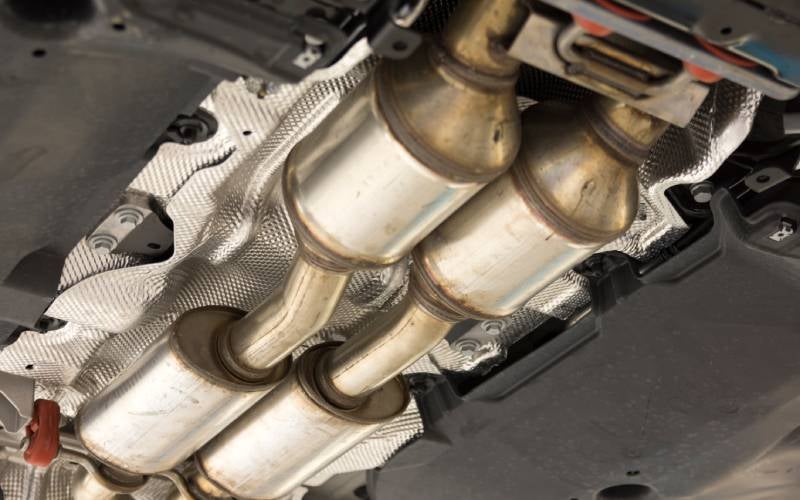
close up of catalytic converter under vehicle

What Is A Catalytic Converter And Why Are People Stealing Them?

What Is A Catalytic Converter And Why Are People Stealing Them? During the pandemic, catalytic converter theft has unfortunately been on the rise. What makes them a prime target for these ne'er-do-wells are the precious metals inside, as well as their easy-to-access location on a vehicle. Catalytic converters are a part of the exhaust system, and their job is to convert harmful gasses into more inert gasses. We'll explain this more below. While Michigan does not enforce emissions testing like California and Texas do, the catalytic converter plays an important role in keeping West Michigan beautiful. If that doesn't convince you, driving without one is a noisy experience! Catalytic converter replacement is usually an expensive repair because they contain precious metals like platinum, rhodium, or palladium. The good news is if you have comprehensive auto insurance, catalytic converter theft is usually covered, minus your deductible. If you turned on your vehicle and it sounds like a motorcycle, the Borgman Service Team is here to help. How Do Catalytic Converters Work? Catalytic converters are essentially a tube filled with a ceramic "honeycomb." Exhaust from the engine enters at one end, passes through these chambers, and exits at the other end to the muffler. This honeycomb lattice is designed to expose the exhaust gasses to as much surface area as possible. This is because the ceramic is coated with two different catalysts (these are the metals that make this part so valuable.) The first catalyst strips oxygen off of harmful nitrogen oxides, creating harmless nitrogen and oxygen gasses. The second catalyst adds oxygen to carbon monoxide creating carbon dioxide. While catalytic converters are pretty good at their job, they don't remove everything and only work efficiently when they're hot. That's why it's important not to touch them after using your vehicle. If They're Easy To Remove, Why Are Catalytic Converters Such An Expensive Repair? It's mostly the part itself that drives the cost up. The metals we mentioned above are expensive even as raw materials, not to even mention the machinery and processes that go into making them into catalytic converters. With theft on the rise and supply chain interruptions, basic supply and demand drives this cost up further as more and more people need replacements. The inflated cost then makes them an even juicer target for thieves. The other reason this could be expensive is that thieves favor speed. Instead of carefully breaking welds or unbolting the part they're after, they often use electric saws to cut the part out. This leaves behind extensive damage to your exhaust system. Depending on how much was removed, you may need all new piping from the exhaust manifold down to the muffler, one or both oxygen sensors plus their wiring, and more. If Michigan Doesn't Have Emissions Testing, Why Do I Need A Catalytic Converter? Some states like California and Texas have mandatory emissions testing in an effort to reduce smog and pollution. Michigan does not have these requirements, however, every new vehicle sold here is compliant and that helps the whole country stay cleaner. As climate change worsens, catalytic converters have both been deemed essential and controversial. Transforming dangerous gasses like nitrogen oxides into their harmless ingredients is a function they perform well, but in older models, small amounts of nitrogen dioxide gas (NO2) slip through. This is an even more potent greenhouse gas than carbon dioxide. Catalytic converters also make a vehicle produce their carbon dioxide all at once, rather than letting carbon monoxide pick up its extra atom slowly in nature. This being said, the gasses that catalytic converters remove are far worse for the environment and our air quality than the gasses they produce. They're an important part of every internal combustion engine and you should not use your vehicle without one. If that doesn't convince you, a missing catalytic converter makes your exhaust loud and all of those gasses seep into the cabin. This makes driving a noisy and smelly experience with serious health risks. If you're concerned about emissions, Borgman has a growing lineup of all-electric vehicles including the exciting Ford Mustang Mach-E! You can reserve yours here. Do You Have Any Tips For Preventing Catalytic Converter Theft? The unfortunate reality is that this is a crime of opportunity, and there are limited things you can do to prevent theft. SUV, Pickups, and Hybrids are especially vulnerable: trucks and SUVs because they're easy to crawl under and hybrids because of the higher concentrations of the valuable metals inside. Skilled thieves can remove a catalytic converter in mere minutes. Parking in well-lit areas can be helpful, as suspicious activity around your vehicle will be more visible. Another tip we've seen is to spray your catalytic converter with day-glow high-temperature paint (like the kind for barbecues and engines) and then scratching your VIN into the paint. The theory is that it makes your catalytic converter traceable and therefore less desirable. Most scrap yards document their incoming high-value parts and who brought them, but an unscrupulous scrap dealer likely won't. If you have concerns about catalytic converter theft, please feel free to Contact Our Service Department and we'll give you the best help and support we can. Noisy Exhaust? Trust The Experts at the Borgman Service Center Whether it happened gradually or suddenly, driving a noisy car can be an embarrassing and even smelly experience. If you suspect something is wrong with your muffler, catalytic converter, oxygen sensors, or anything else with your vehicle, Schedule An Appointment with us and we'd be happy to help. Be sure to check out the latest Service Coupons before your visit. Come see why we're the Best in the West!
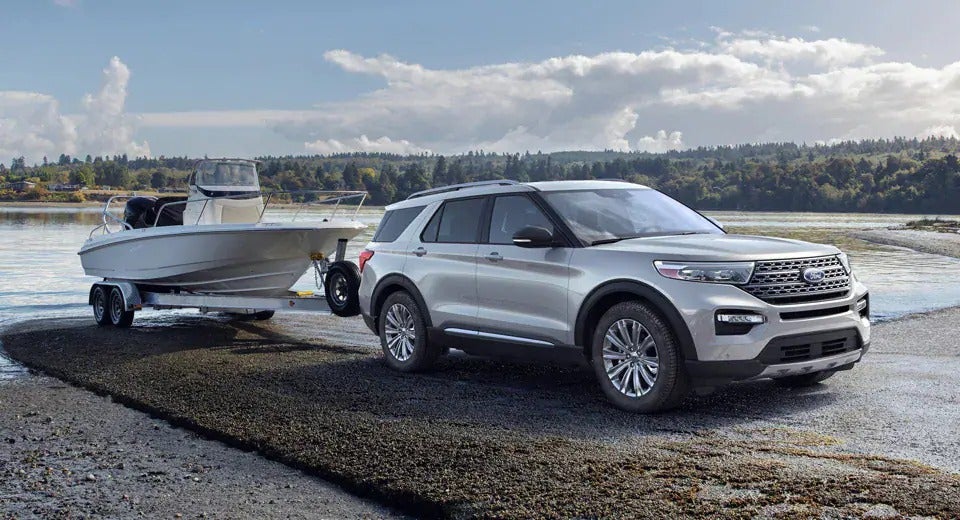
silver Ford Explorer launching boat into body of water

West Michigan Buyer's Guide for Towing Vehicles

Memorial Day Weekend is just around the corner, and if you were thinking about celebrating the unofficial start of summer with a family road trip, Borgman is here to help. Many families tow boats or campers up north for the weekend, and if you wanted to join their ranks there are a couple of things you'll need to consider first: How Heavy Is Your Trailer AND Your Load? What Vehicle Will You Be Towing With? Of course, there is more to towing than these two points. If you've never towed a trailer or RV before (or need a refresher,) check out our latest Borgman How To for driving and safety tips. In this article, we'll talk about what to look for in a New or Pre-Owned Towing Vehicle or upgrades you can make to your existing vehicle. How Heavy Is Your Trailer? How heavy your trailer or RV is will determine which vehicle you should be on the lookout for, so it's worth figuring out what they weigh. Your trailer should have a curb weight marked on it somewhere or noted in the manual, and the same goes for your RV or camper. If you have a boat, it goes without saying that you'll add that to the weight of the trailer. The same goes for all of the gear in your camper: tools, grills, the weight of the full water tank if you have one, and all the other things that all add up. This is also a good time to make sure that the electronics and mechanical parts of the trailer still work. It's worth doing a "dry run" and checking that brake lights, turn signals, and marker lights are all working when hooked up to your vehicle. Also, it's worth going through hooking up the trailer to the vehicle so you know exactly what to do before you set out and identify any parts that need to be replaced. You can also check the trailer brakes now (if you have them) too. What To Look For In A Tow Vehicle Now that you know how much you need to tow, what kind of hitch you need, and if your wiring harness fits the trailer, now it's time to bring that information to Borgman. If you have an existing vehicle that can handle the load, adding extras (depending on the vehicle) like telescoping side mirrors, trailer cameras, upgraded hitches, and more can take some of the stress out of towing. Upgrading your axles and rear differential can possibly squeeze a few more pounds into your towing capacity, but it's best to have that discussion with us next to your vehicle, as this is a case-by-case situation. If you're browsing for a new towing vehicle for the summer season, you're coming armed with the knowledge of exactly what you need the vehicle to be capable of. In this situation, you have three options at Borgman right now. First, you can browse our New Ford Inventory, which may or may not have what you need because of the current nationwide vehicle shortage. Second, you can take a look at our Pre-Owned lot for late-model Ford Trucks and SUVs. There are plenty of good, solid towing vehicles in our selection and some serious deals to be had, so it's definitely worth your time to check. All of our Pre-Owned Vehicles come with our Free B-Protected Warranty, so you can shop worry-free. Lastly, if you're willing to wait, you can specify the exact vehicle you need and Borgman will order it for you straight from the factory. You'll be amazed at how many options and configurations there are to choose from, and the Borgman team is here to help you every step of the way. Since this option takes some extra time, we'll give you an extra $500 for your trade-in! (If you go this route, you need to get in touch with us by May 31st, 2021.) If you're looking for inspiration, take a look at this Towing Accessories Guide. Shop New, Used, and Custom-Ordered Ford Towing Vehicles at Borgman Ford in Grand Rapids! Check out these reasons to Buy From Borgman, review our Free B-Protected Warranty on All Used Vehicles, and Get In Touch With Us with any questions or to get started. Remember, if you see a better deal on a New Ford somewhere else, let us know and we'll match or beat the price! Come to see why we're the Best in the West!

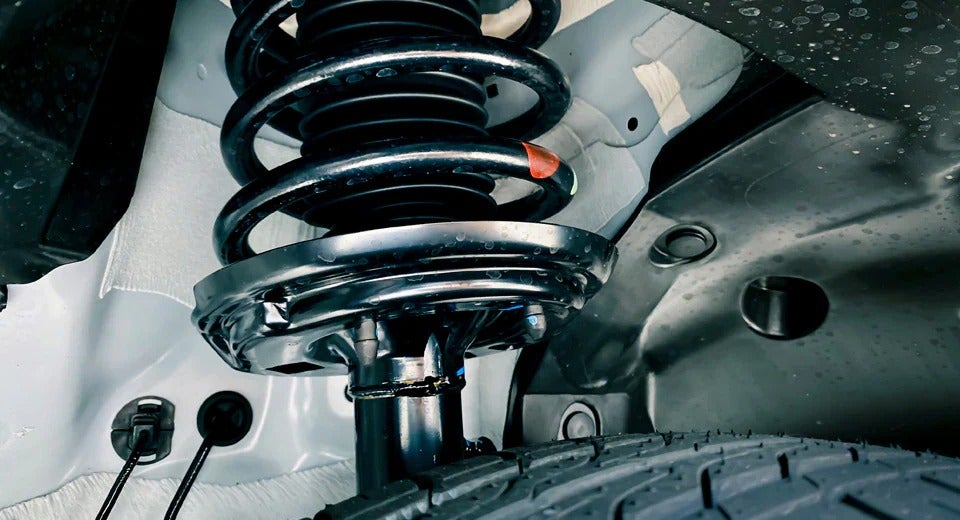
close up of a vehicle shock

What's The Difference Between Shocks and Struts? When Do They Need To Be Replaced?

Spring has arrived in West Michigan, and many are looking to hit the road out of Grand Rapids for fun weekends of exploration and relaxation. Whether you're traveling down interstates or cross country, your shocks and struts make sure you don't feel every single bump in the road, and even play a role in ensuring your vehicle doesn't damage itself. Like many other moving parts on your vehicle, shocks and struts have a lifespan and will eventually need to be replaced. In this article, we'll explain the difference between shocks and struts, what they do, and when it's time to have them replaced at the Borgman Service Center. What Are Shocks and Struts, and What's The Difference? Both shocks and struts essentially do the same thing: absorb sudden movements created by bumps in the road. Where they are different is that a strut is a structural part of your suspension, and a shock is not. Shock Absorbers or shocks are simple pistons with hydraulic fluid inside. When the wheel hits a bump, the fluid inside compresses through a small hole into another chamber, which takes the jarring, sudden movement and smooths it out. The excess energy converts to heat and radiates out into the atmosphere. When the wheel returns to its normal position, the oil is drawn back into the first chamber, smoothing out this movement too. McPherson struts, coil-over springs, or simply "struts" are different in that they actually hold your vehicle up off the ground. Struts are also usually where your alignment is set, so they have a hand in your steering system too. Struts are typically found on the front wheels of vehicles for this reason. They are structural parts, and apart from their inner beam and huge spring, contain a replaceable shock cartridge so that when it wears out, you don't have to replace the full assembly. When Do I Need To Replace My Shocks or Struts? Generally, you'll need new shocks and strut cartridges every 50,000 miles or so, depending on how often you're driving on dirt or poorly maintained roads. The first thing you may notice is your ride is getting a lot bumpier, but if this is gradual you may not. However, when struts are nearing the end of their life, the symptoms can be more pronounced. You may feel your vehicle nose-dive when you brake or lift-off when you start moving. You may also find that it feels like driving a bowl of jelly when you exit the highway down a looped ramp. Another sign that something is amiss are uneven wear patterns on your tires. The Borgman Team is good at spotting these during a tire rotation, and if we see it we'll let you know. Though this tip is something that's really only practical on passenger cars, you can push down on the fender above a strut and see if the car "bounces" when you release it. Healthy struts will raise the car to its normal position and stop. Worn struts will allow the car to travel more. Need New Shocks or Struts? Trust the Borgman Service Center in Grand Rapids! If you've been noticing your vehicle handling strangely, making new noises, or just bumpier than normal, then head over to the Borgman Service Center today. We'll make sure your vehicle is in tip-top shape for your spring wanderings around West Michigan. Our friendly and highly knowledgeable staff is here to make sure you understand everything in your vehicle health report, and the function of the parts we need to replace. If you ever have any questions, we're here to help. Check out our latest Service Coupons, then Schedule Your Appointment Online. Come see why we're the Best in the West!
How Do Anti-Lock Brake Systems Work?

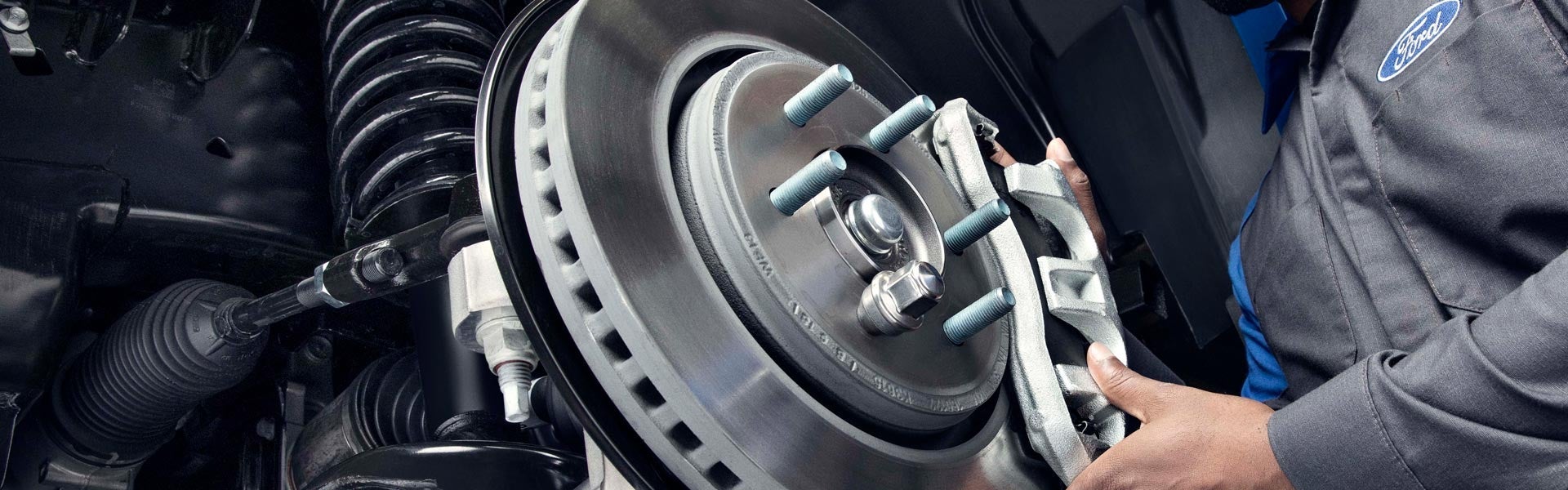
Anti-Lock Braking System (ABS) is a technology that works while you drive, ensuring that your braking system restores vehicle control when you start to feel out of control (in the case of a skid, for example). Dating back to the 1920s, anti-lock braking didn’t become standard on vehicles across the world until three decades ago, which was a major improvement in safety while driving in adverse or unstable conditions. Understanding why they’re part of your vehicle’s mechanical system and how it works is critical for knowing when it’s working in order to keep your driving as safe as possible, and when they’re not working and it’s time to bring it into the Borgman Service Center. How Does ABS Work? ABS ensures your brakes don’t lock in a position that may encourage skidding or loss of vehicle control — meaning, it initiates a slowdown in wheel rotation and automatically adjusts braking application (think a pumping mechanism) to make sure you don’t slide when you slam on the brakes. Essentially, it’s working in the background to help you stop safer whenever you initiate a hard, immediate cessation of speed. The pulsing brake pattern helps you maintain control. How is ABS Built? Generally, ABS has up to four wheel sensors that read or measure (by magnetism, for example) when tire rotation has dramatically shifted — so when the wheel stops rotating in a brake or significantly slows. When combined with an anti-lock control module and hydraulic control point, deliver pulsing pressure when your car is sliding or skidding. The best way to ensure you’re not skidding is not to apply the pumping to the brakes yourself, but rather to push the pedal down as hard and consistently as you can and let the ABS do as it’s designed to do. ABS Repair ABS functionality is part of the warning control module of a vehicle, meaning it’s designed to notify you when it’s off-kilter. Typically, the error is in one of the sensors, not in the ABS functionality. However, it’s important for you to bring your car in when you’re notified of an ABS malfunction immediately. If it’s a sensor, it’s likely debris has injured one or more of the sensors, and is an easy fix. If it’s your ABS, you shouldn't be driving without it. The Borgman Service Center will ensure your brakes are working properly, that ABS is responsive, and that your sensors are clear and operating flawlessly. For maximum efficiency, a working ABS should also be paired with good-condition braking pads and rotors, too! Of course, the best way to ensure you’re ABS is working properly is to come into Borgman Service Center and let us take a look. The Works is a check-up package that includes tire rotation and pressure check, a routine brake inspection, vehicle checkup, fluid top-off, battery test, filter check, and belts and hoses check for $44.95. Stay safe and stay informed, especially during the variable weather in Michigan as the seasons change! Check out our Service Specials and Schedule Your Appointment online today. If you have any questions, our friendly and knowledgeable staff is here to help so please feel free to contact us. Come see why we're the Best in the West!
7 Car Prep Tips For Fall Road Trips in West Michigan

Get Ready To Hit The Road for Labor Day Weekend At Borgman Ford, we want to make sure that everyone taking off for the long Labor Day weekend has a safe trip across West Michigan. Whether your weekend plans are taking you up north or just across Grand Rapids, it's still a good idea to check out the health of your vehicle from time to time. If you are about to embark on a long trip, making sure that your vehicle runs like a top before setting out can ensure that you arrive on-time and safely. Below, we've included a handy 7-step guide from MyFordMag.com that shows some simple but important tips for checking out your vehicle and making sure you're prepared for anything on a long drive around Michigan. Here are the 7 tips: 1. Change your cabin air filter. It’s easy to forget all about your cabin air filter, especially on short jaunts around town. But when you’re on a road trip, stale air is hard to ignore. The air filter catches dust, pollen, and allergens that enter through the vents from the heating, ventilation and air-conditioning system, so after blasting the heat all winter, you might need to change it to keep the air cleaner. Check your owner’s manual to find out the recommended maintenance interval; your cabin air filter usually needs to be replaced every 15,000 miles or so, which is about twice as often as your engine filter. But if you suffer from allergies or respiratory problems, or if you frequently drive in dusty conditions, you may want to replace it more often. To change the filter, first check your manual to locate it (it’s often behind the glove compartment), then depress the inner plastic tabs to pop it out. Replace it with the appropriate Motorcraft® cabin air filter. Want to make it even easier? Our service center can change the filter for you. 2. Check your heating and cooling systems. Halfway into a road trip is pretty much the worst time to have your car overheat. Warmer months and long journeys require more coolant, because the engine’s constant power gives off a lot of heat, and using the air conditioner can put an extra load on the engine. So it’s very important to fill up your coolant before you head out. Under the hood, you’ll see the engine coolant reservoir, usually a translucent white container with a hose that connects to the radiator. There’s a fill indicator on the reservoir. If your engine is cold, the coolant level should be at the cold fill line. If you need to add fluid, make sure the engine and reservoir cap are cool to the touch. Before you twist off the cap, cover it with a thick cloth, as the cap is under pressure. Add either pre-diluted coolant or a 50-50 mix of the fluid and distilled water up to the cold fill line, and consider using the correct Motorcraft® coolant for the best results. Replace the cap—you should be all set with the coolant. But before you close the hood … 3. Fill up your other fluids. First, check your oil. Then top off your windshield wiper fluid to help clear the inevitable bug splatter buildup that comes with road trips. The reservoir is usually white and transparent and has a windshield/water symbol on the cap. Next check your power steering fluid, your transmission fluid (if you haven’t checked it for a while) and brake fluid. Low levels of brake fluid may mean you have worn-out brake pads and you should get them inspected at your dealer. Your owner’s manual will provide specific information about which fluids need to be replaced and when, based on your vehicle’s year, model and make. While you’re under the hood, look for anything odd: twisted hoses, leaks or corrosion on the battery. If everything looks good, go ahead and shut the hood now. 4. Inspect windshield wiper blades. Wiper blades take a beating during winter months when snow and low temps can degrade the rubber, so you may want to replace them before you start your trip. It’s easy to do yourself; just check your owner’s manual for instructions and blade sizes. Or even simpler: have the blades replaced at our service center. 5. Tend to your tires. Scenic overlooks should be for taking beautiful photos, not changing tires. To try to minimize hassle on your road trip, make sure you take care of your tires ahead of time. Fill them to the correct pressure. Rotate them every 8,000 to 10,000 miles, depending on the manufacturer’s recommendation, to ensure even tread wear. And look for each tire’s wear indicator: When it appears level with the tread, it’s time for a replacement. Use the Ford Service Tire Finder to get the right match. You can also go to the Borgman Service Center to get your wear indicators examined by one of our service technicians—and they can change your tires for you. Remember: While checking your tires, you also need to test the pressure on your spare tire. If your spare is secured underneath the vehicle, make sure you know how to remove it, and that the parts aren’t rusted or stuck—it’s way better to figure this stuff out ahead of time instead of when you actually need your spare. 6. Test the lights and mirrors. Safety is of the utmost importance on a road trip. Besides buckling up (yourself and all your passengers, of course), make sure your mirrors are moveable and in the right position. Set aside a few minutes before you leave to test your headlamps, high beams, turn signals, brake lights and hazard lights; do it with the help of a friend. Adjust headlamps to the proper height and angle to allow you to see the road better—and keep your lights from shining directly into other drivers’ eyes. If any parts are not working properly, you can check out FordParts.com or visit the Borgman Parts Center to find a new one. 7. Pack an emergency kit. Chances are, you already have some sort of an emergency kit stashed away somewhere in your vehicle. But do yourself a favor before you start your road trip: Track down the kit, open it up and take a quick inventory. Depending on how old it is, you may need to replace items or add to it. A comprehensive emergency kit should include jumper cables, work gloves, rags, a tire gauge, emergency blankets, a flashlight, flares, a spare ignition key, and basic tools such as screwdrivers and pliers. You could also add an extra headlamp as well as bottles of engine oil and coolant. For fall months and the wintertime, adding hand-warmer packets, a hat, and an extra pair of gloves and socks would be a good idea too. Tuck it all away in your trunk, and hopefully, you won’t have to dig it out again until just before your next road trip. Looking for a New Road Trip Vehicle in Grand Rapids, MI? If you're looking for a New Ford vehicle for cruising around West Michigan, stop by Borgman Ford in Grand Rapids today and check out our selection of New Ford vehicles. We have spacious, comfortable, and capable New Ford SUVs perfect for family getaways, as well as highly fuel-efficient options for those who travel all the time. If you have any concerns about your current vehicle, especially before going on a road trip, Contact the Borgman Service Center and take it in for a check up!

Contact Us

Fill out this form below and we'll contact you shortly
*Required Fields