


As the seasons change, Michigan’s sprawling forests erupt in brilliant displays of red and gold. If you’re taking to the highways this fall to enjoy the changing leaves with your family, we’ve pulled together some of the best places in Michigan to take in the views. Of course, ensuring your vehicle is ready is key to a successful trip. Whether you need an oil change, tire rotation, or just a general checkup, the pros at the Borgman Service Center are here to help you travel safely. Use our easy Online Scheduler then take a look at our latest Service Offers to get ready to explore.
The Leelanau Peninsula & State Park
M-22 along the Lake Michigan lakeshore is absolutely breathtaking in autumn. At places, you can see Lake Michigan from the road, but most of the way is canopied by forest-capped rolling hills. The route starts near Manistee among the fruit trees and roadside produce stands before approaching the dramatic hills and blazing colors of the Sleeping Bear Dunes National Lakeshore. Keep following until you reach Leland, a small coastal town between the Big Lake and Lake Leelanau.
If cycling is your thing, you’ll find plenty of opportunities near Northport, MI. M-22 provides the twists and turns you’ll be sure to enjoy before veering southward along the Leelanau Peninsula’s eastern shore on the way toward Traverse City.
8 miles off of M-22, a wooded M-201 brings you to Leelanau State Park near Northport. The park is surrounded on three sides by Lake Michigan, granting colorful hiking trails, surf-washed beaches, and the brilliant white 1858 Grand Traverse Lighthouse. If you’re looking for a destination to travel to up north, this is one of the best.
The Blue Star Highway
Michigan’s favorite warm-weather retreat, the Lake Michigan Lakeshore, transforms into a riot of color in the fall. If you follow Lakeshore Avenue south from Grand Haven, you’ll be traveling through a tunnel of colorful maples and poplars. In Holland, the Blue Star Highway features sweeping curves that appeal to Sunday drivers, motorcyclists, and anyone in love with sweeping rural landscapes. The journey concludes with the cool sands and Lake Michigan vistas of St. Joseph’s Lookout Park.
Alpena & Tawas City
It’s easy to overlook Michigan’s “Sunrise Coast,” but along the Lake Huron shore, the brilliant autumn foliage gives reason to slow down. Lakeside towns brighten with color and bright hardwoods offer a lovely backdrop to rocky beaches and romantic lighthouses. In Tawas City, take a quick detour out to sandy Tawas Point State Park to see Lake Huron’s powerful whitecaps and visit the elegant white Tawas Point Lighthouse. Then follow US-23 along the Lake Huron shore, through coastal villages that slow down with the cool of autumn.
In Au Sable, lace up your boots and hit the Shore to Shore Hiking Trail to enjoy the vivid colors of maple and poplar trees and the pleasure of crunching leaves underfoot. In Harrisville, feast on a beachside picnic or detour to the towering white-and-red lighthouse at Sturgeon Point. Finally, in Alpena, catch one last look at powerful Lake Huron from Thunder Bay.
Old Mission Peninsula
Old Center Road, or M-37, winds up the center of Old Mission Peninsula, a thin strip of land that leads into Grand Traverse Bay. This route twists and turns over rolling hills of tidy, golden-hued vineyards and hardwood stands, all backed with views of sparkling Lake Michigan. Look for opportunities to buy locally-grown apples and pears or stop at one of a dozen wineries occupying Old Mission, including award-winners Brys Estate, 2 Lads Winery, and Chateau Grand Traverse.
For even more destinations, visit Michigan.org.

Ready to set out on your next adventure? Let the pros at the Borgman Service Center ensure your oil changes are up to date, your engine, tires, brakes, and other components are all in good condition, and that your vehicle is ready for a successful trip!
Schedule Your Appointment Online here and take a look at our latest Specials to save on the services you need. Come see why we’re the Best in the West!
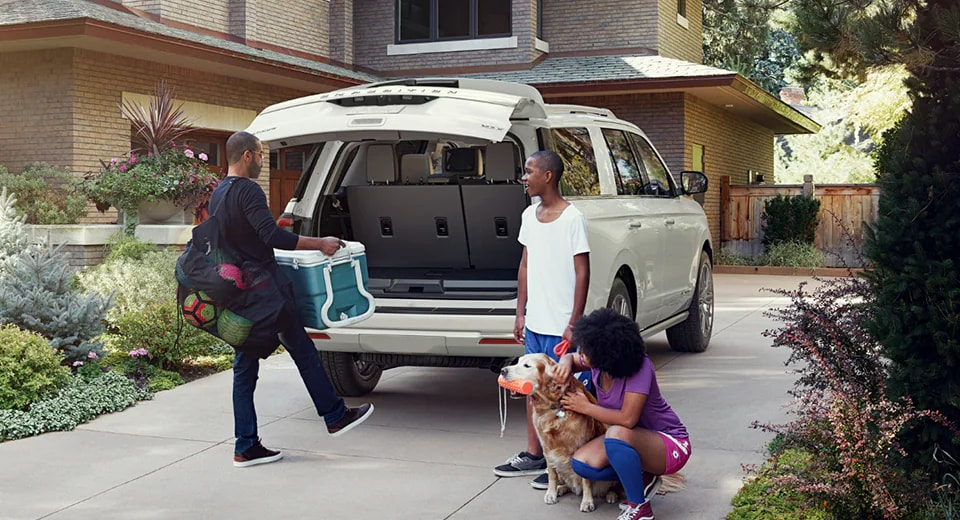
With summer officially arriving this month, it’s time to think ahead on your upcoming West Michigan adventures! Whether that means spontaneous trips to the lakeshore, long weekends at a campground, or even a week up in the UP, there are easy things you can do to get your vehicle ready. Check out our quick summer adventure guide for tips on keeping your vehicle clean and saving money on gas!
Tips For Keeping Your Vehicle Fresh and Clean
One of the biggest challenges on summer road trips is keeping your vehicle interior free of sand and dirt, especially with kiddos in the back seat. We found a few neat tricks you can try out this season:
Use a plastic, resealable cereal container as a wastebasket: Take the entire lid off, fit a plastic grocery bag over the container, and replace the lid. These often have a small, resealable opening on the lid to allow you to pour cereal without removing the whole top. You can use this opening as the “lid” of the trash can. You can store extra grocery bag “liners” at the bottom of the container too.
Bring a laundry basket with you to the beach: The best way to keep sand out of your floor mats, upholstery, and everywhere else is to leave most of it at the beach. Once everyone changes back into street clothes, throw everything with sand on it into a plastic laundry basket and give it a good shake. Most of the sand will come out of the sides, and the mess will be contained until you arrive back home. See it in action here!
Bring baby powder and a washtub for extra sand removal: Getting sand out of clothes is half the battle. Sand stuck to your skin will inevitably end up all over the place too. Use baby powder to absorb moisture on your skin and the sand will fall right off. You can also bring along a plastic washtub as a portable foot bath before getting in the vehicle!
Invest in All-Weather Floor Mats: These aren’t just for slushy snow! When you get home, you can easily pull these out of your vehicle and shake the sand, dirt, and debris right off. You can also get cargo liners made with the same material to go under that laundry basket of sandy clothes in the trunk! If you have a Ford or Mazda, Borgman provides mats that are tailor-made for your vehicle too.
Mitigate that “lake water” or “wet dog” smell: When rolling the windows down isn’t enough, you can make your own air fresheners that fit right in the cupholders! If you have extra candles around the house, another “summer car hack” we saw involves poking holes in the top of a mason jar with a hammer and a large nail, then putting chunks of leftover candle wax inside. After your vehicle heats up in the summer sun, the wax melts – filling your vehicle with a fresh scent.
How To Maximize Your Fuel Efficiency
With gasoline prices soaring, you might be wondering how to spend less on fuel for your trip. Some of the things you can do involve making sure your vehicle is running its best, but others are habits you can adopt to curb your fuel consumption on long trips.
Make sure your tires are inflated to spec: Tires low on air will form more friction with the ground, meaning they require more force to turn. While on the surface this sounds like a good thing, it also has a negative impact on your handling and will, over time, damage your tires. Make sure your tires are inflated to the pressure marked on the driver’s side door sill for optimal safety and fuel efficiency.
Turn on your fuel economy display: For vehicles that have one, your current estimated miles-per-gallon display will show you how much fuel you’re using from moment to moment. While it’s important to keep your eyes on the road, having this info plainly visible at all times will help you see when you’re using the most fuel. Valuable information if you’re being fuel-conscious!
Avoid “jackrabbit” starts and stops: Your vehicle uses the most fuel when moving from a stop. Getting up to speed gradually will consume less fuel than taking off like a rocket. On the flip side, allowing your vehicle to coast for a while before coming to a stop saves on fuel too.
Slow down: If you plan your trip and allow enough time for travel, what’s the rush? Once you go faster than about 70mph, your fuel economy will suffer. Try to keep a steady speed or better yet, set the cruise control. This feature gives your pedal foot a break on longer highway trips and saves fuel in the process. Just be sure to take on hills (up and down) manually for the best performance.
Avoid “Fuel-Saving” Products: When you’re on a mission to save fuel, you may see devices (or worse, fuel additives) that you can use to boost your mpg. The vast majority of these do absolutely nothing for fuel economy and could damage your vehicle, and the ones that do work only offer minimal savings. We’re willing to bet the cost of these will not be offset by your actual fuel savings, so it’s best to protect your vehicle and avoid them altogether.

Get a “Pre-Flight Check” at the Borgman Service Center in Grand Rapids, MI
While there are things you can do to ensure a successful summer trip, there are other things best left to the experts. The pros at the Borgman Service Center know exactly what to look for before you set out and will ensure your vehicle is in tip-top shape for the trip.
For example, if you’re looking to save on fuel, we can check to make sure your air intake and filter are clear, your fuel/air mixture is correct, and more. The EPA states that failed oxygen sensor can reduce your fuel efficiency by up to 40% or more, and we have the experience to detect issues like this as well.
Need to make an appointment? Use our easy Online Scheduler to plan your visit, then head over to our Service Coupons for the latest offers and rebates. If you have any questions, feel free to Contact Us. We’ve been keeping West Michigan moving since 1960, and it’d be our pleasure to serve you. Come see why we’re the Best in the West!

Did you know there are parts of your powertrain and suspension that are designed to be replaceable? Aside from the obvious ones like shocks and struts, there are a number of components that all work together to power the wheels, keep your vehicle stable, and keep your steering tight and predictable. These include your axles, tie rods, sway bar, and wheel hubs. If you plan on hitting the road in West Michigan this summer, it’s worth having the Borgman Service Team look at these rugged but critical components first.
We typically don’t think about these parts until there’s an issue, but they are all under stress every time you use your vehicle and they do eventually wear out. West Michigan drivers especially need to keep these parts in mind, as our roads are not as smooth as they are in other parts of the country. This will wear these parts out faster than the national averages you see online. Today, we’ll discuss what your axles, tie rods, sway bars, and wheel hubs are, what they do, and when you should replace them at the Borgman Service Center.
What Do Axles Do and When Do They Wear Out?
Constant Velocity Axles and Joints, since the part performs both functions, have a relatively simple job. They transfer power in the form of rotation from the transmission to the wheels. Also known as CV Axles or Half Shafts, they consist of two solid metal couplers on either end with a rubber boot covering each joint. This keeps lubricating grease inside the joint while keeping dirt, water, and contaminants out. These joins allow the transmission to be positioned higher than the wheels and allow the axle to bend when the wheel travels over bumps or turns.
CV Axles do not need to be replaced very often at all, in fact, it’s far more common to replace them both when one starts to fail rather than on a schedule. Signs that your vehicle’s axles are wearing out include seeing dark, sticky grease on the inside of your tires, and a scraping, clicking sound when you take tighter turns. However, the latter can also be caused by a failing wheel hub bearing (more on that later.) Your passenger side CV Axle is likely to wear out first since right turns are taken more sharply in the USA and are more common. If you’re concerned that yours is wearing out, check the inside of that tire first.
What Are Tie Rods? Why Do I Need Them Inspected?
Just above your axles (in most cases) are your tie rods. Their job is to connect the wheel hubs to the steering system, which translates the turning motion of your steering wheel into a side-to-side motion – pulling on one and pushing the other. There are inner and outer tie rods, and the inner ones are covered in a protective rubber boot, much like an axle. Like the other parts mentioned here, they’re very durable and don’t have a strict maintenance schedule.
However, when your tie rods fail, you’ll be unable to steer. Signs that they are wearing out include “play” or vibrations in the steering wheel, excessive tire wear with sometimes bizarre patterns or sounds clunking while turning. One of the experts at the Borgman Service Center will be able to determine if it’s time for a replacement.
What Is A Sway Bar, What Does It Do?
If you drive a smaller vehicle, chances are you don’t even have a sway bar. Also called an anti-roll or roll bar, sway bars are rigid metal beams bent to whatever needed shape and are typically only found in larger vehicles like pickup trucks or cargo vans. These act as a spring or lever when under load, and they work to counteract centripetal force when making turns – ensuring all of the tires remain flat on the pavement.
When sway bars begin to fail, you’ll start to notice your vehicle getting more and more unstable when taking turns. You may also hear something clanging or rattling around in your engine bay. Generally, if you’re experiencing steering or stability issues, this will be one of the first things that are inspected.
When Do I Need To Replace Wheel Hubs & Bearings? What Do They Do?
There are many different types of wheel hubs and bearings, but their primary jobs are the same: keep the wheels spinning smoothly. Wheel hubs are just that: a place for the suspension, brakes, axles, steering, and the wheel itself to all bolt together. In the center, between the threaded posts your wheel bolts onto, you’ll see a spindle that connects to the axle. This part turns, which then turns the posts and the wheel, and the bearings keep this motion nice and smooth – reducing friction and noise.
Nowadays, most wheel bearings are non-serviceable, meaning if your bearings wear out, the whole hub needs to be replaced. When your wheel bearings begin to fail, you may notice a grinding sound, or a sound akin to a ping-pong ball spinning around in a plastic cup coming from the wheels. As the situation worsens, your wheel will start to wobble when rotating, eventually falling off altogether.
The easiest way to check if you need a new wheel hub is to raise the vehicle safely on jack stands, grab the top and bottom of a driven wheel, and see if you can shake it as hard as you can. If you’re able to move the wheel around, you need new bearings. If there’s barely any movement, you can also put the vehicle in neutral (make sure your non-drive wheels are chocked or the vehicle is completely raised) and spin the wheel. This lets you listen for odd sounds from the hub without the engine drowning them out. If you hear anything above a whisper, bring your vehicle in for an inspection at the Borgman Service Center.

Enjoy the West Michigan Summer Worry-Free with the Borgman Service Center
Before hitting the road to adventure this summer, Schedule an Appointment with the Borgman Service Center. Our team will ensure your vehicle is running in tip-top shape for the summer months or your next vacation. This is in addition to making sure you understand the work to be performed, and how critical the part is to the life and safety of your vehicle.
To get started, use our easy Online Scheduler to make your appointment, then check out our latest Service Coupons. If you have any questions, please feel free to . Come see why we’re the Best in the West!

When To Replace Your Timing Belt & Why It’s Important
Did you know that there’s one rubber belt within your vehicle that’s responsible for “conducting the whole orchestra” in your engine? Timing Belts don’t get talked about a whole lot because they’re tough, concealed, and don’t need attention very often. However, if it fails, it will bring your road trip to a screeching halt.
The West Michigan adventuring season is about to begin, and making sure your vehicle is ready is key. Below, we’ll explain what a timing belt is, what it does, and why it pays dividends to have it replaced on schedule rather than waiting for it to fail.
What Is A Timing Belt and What Does It Do?
An internal combustion engine has many, many moving parts, and some of them are delicate. A timing belt keeps them all in sync with each other as the engine turns, making sure each stage of combustion is happening exactly when it’s supposed to. This not only ensures your engine runs efficiently, but that parts don’t become bent or damaged from colliding with one another.
A timing belt is usually made of rubber reinforced with steel or strong fibers and is obscured by a cover or shroud. If you’re looking for it, it’s not too difficult to find – it will be situated on the end of your engine and in most cases, right next to the water pump. If you remove the shroud, you’ll see it wrapped around the ends of the camshaft and crankshaft, with teeth on the inside. This is what keeps the timing between the two.
Some older and performance vehicles will have a timing chain instead of a rubber belt (like a bike chain.) These are stronger but much noisier than their rubber counterparts, so rubber is more common.
How Do I Know When My Timing Belt Needs To Be Replaced?
Since timing belts are so critical to your vehicle and require tools to even look at to check, we recommend you have yours inspected every 60,000 miles. Your owner’s manual will make a recommendation, sometimes as long as every 120,000 miles, but bear in mind that extreme temperatures, heavy acceleration, and stop-and-go traffic will shorten the life of your timing belt too.
The most direct way to check your timing belt is to remove the shroud if possible and inspect it. The belt should be free from cracks or splits, deflect roughly 1/4 to 1/2 inch when pressed with your finger, and you shouldn’t be able to see the steel or fiber reinforcements inside the belt.
NOTE: Unless you have extensive experience with auto repair, NEVER remove or adjust the timing belt. If either the camshaft or crankshaft becomes out of sync, your engine will likely become permanently damaged as a result.
In lieu of looking at the belt, you can also keep an eye or ear out for these tell-tale signs your timing belt may need to be replaced:
- Your vehicle feels sluggish
- You’ve had issues with misfires, possibly due to faulty spark plugs or ignition coils
- You hear squealing or clicking from the front of the engine (not from the serpentine or accessory belt)
Another compelling reason to have your timing belt inspected is if you’ve purchased an older Used Vehicle and the seller didn’t give you proof it was inspected or replaced at the recommended time.
When a professional shop like the Borgman Service Center replaces your timing belt, the water pump is usually replaced at the same time. This is because the two parts are in close proximity to one another, cause extensive if they fail, and have similar lifecycles. In fact, most DIY timing belt kits include a water pump for the above reasons. Water pumps circulate coolant throughout your engine, so it’s not a part you should overlook. While replacing both makes for a slightly higher repair bill, installing both at once saves on labor costs and means less time in the shop.
What Happens If My Timing Belt Fails?
When your timing belt is near failing, your engine isn’t going to be nearly as efficient as it should be. You’ll hear squealing or clicking noises, notice a significant drop in power, and rough running and idling. If this is the case, we recommend having it towed to the Borgman Service Center as soon as possible.
Most of the time, however, you’ll get little to no warning before the belt breaks. In this unfortunate instance, your vehicle will immediately lose all engine power, and significant, catastrophic damage will likely occur. Losing power like this is not only a costly endeavor to repair, but is incredibly dangerous for you and other motorists.
Engine components typically damaged by a failed timing belt include but are not limited to rods, valves, the camshaft and crankshaft, and pistons. A full rebuild is likely going to be more expensive than having a brand new engine installed, making this a very costly repair.

Trust The Experts At The Borgman Service Center To Keep You Moving
If it’s time to have your timing belt or any part of your vehicle inspected by a pro, turn to the experts at the Borgman Service Center in Grand Rapids, MI. Our highly-trained and friendly staff will listen to all of your concerns, and make sure your vehicle’s recommended maintenance is performed on time and correctly.
Need to make an appointment? Use our easy Online Scheduler to plan your visit, then check out our Service Coupons for all the latest offers and rebates. If you have any questions, please feel free to Contact Us! Come see why we’re the Best in the West!

Spring arrives this month in West Michigan, and some of us may be spending an upcoming weekend getting their summer vehicle out of storage. During this process, it’s not uncommon to find things not working like they should, or even not working at all. The causes are as varied as the issues, but there are some common systems that can be affected while your vehicle is in storage.
In this article, we’ll cover some common issues you may see when taking your vehicle out of storage (or even just driving less over the winter,) things you can do to fix them, or what to look for that signal deeper issues beneath the hood. We’ll even include a couple of tips for winterizing your vehicle for a hassle-free 2023 season!
My Vehicle Doesn’t Even Try To Start
If you bring your vehicle out of winter storage and find it doesn’t start at all, it is most likely the battery. Batteries and extreme temperatures do not mix, so the first step is disconnecting your battery and taking it to the Borgman Service Center for testing. In most cases, charging or replacing your battery fixes the issue.
Next fall, we recommend disconnecting your battery, covering the posts with safety caps, and storing it somewhere warm for the winter. Make sure you take precautions against leaks and short circuits!
My Vehicle Tries To Start, But Sputters and Stalls
If you turn your ignition over and there’s a lot of sputtering, stalling, uneven idling or stalling, there could be a number of causes. However, there are only three main things to look for: fuel, air flow, and spark. A disruption to any of these will cause misfires, rough idle, or the engine shutting off entirely.
First, ask yourself if you put in fuel stabilizer when you stored the car last fall. If not, expired gasoline is likely the culprit. This one is easy enough to fix yourself. Get a bucket and a hand-siphon (both are very inexpensive) and remove the gas from the tank. Replace with fresh gasoline using an approved container and try again.
If that doesn’t work, check your air intake. It’s not uncommon to find that critters have taken up residence inside the air filter over the winter, or even the tailpipe. This is also a good time to replace your engine and cabin air filter anyway. You an find these at the Borgman Parts counter.
If you’re handy, you can remove the spark plugs to make sure they’re clear of carbon deposits and the wires are in good shape. We would be happy to check for you too if you have concerns.
In the fall, many people storing vehicles will go around the vehicle looking for places rodents might hide like the tailpipe and air intake. Plugging these areas with steel wool works great, (just don’t forget to take them out in the spring) and spreading moth balls under the vehicle adds an extra deterrent.
I Have Warning Lights On My Dashboard, But The Parts Are Ok
Usually when you see your dashboard light up like a Christmas tree in the spring, it’s a sign that something has taken to chewing on your wiring harness. Take a look at the wires under the hood and see if you can spot any obvious damage, but this is likely something the Borgman Service Center will need to handle. Take a look above for tips on keeping little critters away from your vehicle.
My Car Drives Lumpy
If you’ve had your vehicle sit on one spot the whole winter, chances are your tires have developed a flat spot. In less severe cases, you can even these out by driving for a while on a warm day but usually it means they’ll need to be replaced. Performance tires and low-profile tires are especially vulnerable.
There are a couple of ways to mitigate this over the winter. The easiest is to simply park the vehicle on plywood (which also can protect your garage from drips – more on this below.) Make sure you chock the wheels in case the parking brake gives out, and once a month go in and either raise each wheel with a jack and spin the tire, or just push it into another position. Use chalk to mark what part of the tire was touching the floor.
Another thing you could do is store the vehicle on jack stands all winter, but some argue this isn’t great for the suspension and there’s risk of injuring yourself or others.
Coolant Leaked All Over The Garage
If coolant leaked onto the floor, what likely happened is your coolant was too worn out to sustain colder temperatures and froze. When water freezes, it expands and this will crack hoses (which are already more brittle in the cold) or break the joins to the tank and radiator. If you’re handy and have an attention to detail you can try fixing this yourself but the Borgman Service Center can help too.
Next fall, make sure you take your vehicle in and have the coolant tested before storage. If it’s not up to snuff, you’ll need to get the system flushed before winter. Same goes for the transmission!
Leaks can happen, especially if your vehicle is classic or vintage. That’s why we also recommend putting a tarp down under the vehicle to prevent stains on the floor.
Other Things You Can Do To Prepare
Storing a vehicle for the winter is definitely doable on a budget – your biggest expense will likely be plywood for the tires. However, the best way to save time and money in the long run is to store the vehicle correctly. In addition to what we’ve already mentioned, here are some additional things you can do to make getting the vehicle out for spring easy:
- Change your oil before storage: Motor oil can build up contaminants that will soak into your engine parts over time. Getting an oil change right before putting it away will mitigate that risk. Be sure to check the oil level and color before running the engine in the spring!
- Wash thoroughly and use a car cover: Giving your vehicle some serious love before putting it away will pay dividends. Removing dirt, grime, and acids from the paint will ensure they don’t soak in and ruin the finish during the winter. Adding a layer of wax will further protect the paint. Letting it completely dry and using a car cover keeps dust off while in storage too, so it’s sparkling clean in the spring.
- Put moisture absorbers in the cabin
- Adding desiccants to the cabin will help keep that musty odor away in the spring. It’s also better for your health too!

Get Ready For Spring at the Borgman Service Center
If you’ve taken your vehicle out for spring and found issues or just want a checkup, the Borgman Service Center is here to keep you moving. Use our easy Online Scheduler to set up your appointment, then check out our Service Coupons for big savings this spring. We service all makes and models, and it’d be our pleasure to help you get the most out of your vehicle this summer. Come see why we’re the Best in the West!

Many in West Michigan rely on All-Wheel Drive or Four-Wheel Drive to get to their destinations safely in the winter weather. While front-wheel drive has advantages over rear-wheel drive in slick conditions, nothing beats having all four wheels working together to keep you moving.
Naturally, having all four wheels receive power means there’s more moving parts to your vehicle, so in this article we’ll explain what those parts are called and how they function as well as how to maintain them. We’ll also cover the key differences between all-wheel drive and four-wheel drive. Let’s take a look!
Why All-Wheel Drive and Four-Wheel Drive Are Preferred in Winter Weather
With all-wheel drive and four-wheel drive (AWD and 4WD/4×4*) all four of your wheels are receiving turning power or torque from the transmission and pushing the vehicle forward. In slippery conditions, this means the force required to get the vehicle moving from a stop is spread out twice as much as with front-wheel drive, and the chances of all four wheels not having any traction is lower.
If you’ve ever been stuck in the snow with a front-wheel drive vehicle and needed people to get out and physically push to get you going again, this works on a similar principle. The rear wheels are there to spread out the required traction and push from the back in addition to pulling from the front.
Bear in mind the old adage, “Four wheel drive doesn’t mean four wheel stop.” This applies to all-wheel drive too. While it isn’t exactly true, as each wheel has their own brake, the message is that just because you can get moving easier doesn’t mean it’s easier to stop. Always give yourself extra space in slippery conditions.
*4×4 actually means “number of wheels” by “how many of them are powered.” In most cases with consumer vehicles, there are four wheels and four of them receive power. If a vehicle had six wheels, it may still have four-wheel drive but wouldn’t be a 4×4, it’d be a 6×4.
What Is The Difference Between All-Wheel Drive and Four-Wheel Drive?
AWD and 4WD work mostly the same way, but there is a key difference between them.
In an AWD vehicle, power is distributed between all four wheels independently, meaning if a wheel loses traction, it receives less power and the other three turn with more force to compensate. Most modern AWD systems are controlled electronically and will automatically activate when needed.
In a 4WD vehicle, the front wheels operate as normal but the rear wheels will each receive the same amount of power. Before you think this is a disadvantage over all-wheel drive, it’s actually preferred for drivers living outside the city on roads that don’t get plowed often. Some 4WD vehicles allow you to change the settings too based on the conditions or your preferences.
In short, All-Wheel Drive is preferable for city and suburban driving, while Four-Wheel Drive is better suited for more rural conditions.
Do All-Wheel Drive and Four-Wheel Drive Vehicles Need Extra Maintenance?
Short answer: not really. While there are extra parts such as differentials, sensors, axles, and driveshaft that will eventually need service, during your routine checkups and maintenance your technician will only need to check the fluid in the differential (or differentials on AWD.)
That being said, the important thing is to make sure that your transmission fluid is changed on a regular basis. This is true for front-wheel drive vehicles as well. Manufacturer specifications vary wildly on this, but Borgman recommends that your transmission be flushed every 36,000 miles. Your transmission fluid acts as both a lubricant for all of the intricate, moving parts inside as well as a coolant, so it’s of the utmost importance it’s replaced before it starts to chemically break down.

Keep Your Vehicle Ready For Anything at the Borgman Service Center in Grand Rapids MI
Stay one step ahead of the West Michigan winter weather with regular maintenance. Making sure your all-wheel or four-wheel drive system is in good order is key, but other things like tires, coolant, brakes, and your battery play a part too.
The experts at the Borgman Service Center are here to keep your vehicle running like new all year long. Use our easy Online Scheduler to make your appointment, then head over to our Service Specials to save on services you need most. Our customer service is what has set us apart for over 60 years, and we’re here to keep you moving. Come see why we’re the Best in the West!

It’s been a milder winter in West Michigan so far, but the nights are still cold enough to freeze a battery. If you’ve been having trouble starting your vehicle in the morning, it’s probably time to replace it.
Batteries contain chemicals which react to store and discharge electricity. Your vehicle’s battery needs to store enough power to turn over the engine via the starter motor. This is more difficult in the cold for two reasons: first, motor oil is slightly more viscous in cold weather which creates more resistance, and secondly, the cold slows down the chemical reaction that releases electricity.
If your battery is getting worn out, you may not notice until the cold weather arrives. While you should replace your battery every 5 years, sometimes you need one sooner. In this article, we’ll explain how batteries work, why they wear out, and things you can do to prolong their life.
What Purpose Does a Battery Serve on a Vehicle?
Auto batteries serve two main functions within a vehicle:
- Store and deliver enough power for the starter motor and spark plugs to start the engine.
- Manage “keep alive” functions like clocks, security, and memory.
When you start your vehicle, the battery sends about 400 amps of current to the starter motor, turning the engine over until combustion starts. Once the engine is running, the Alternator generates electricity for the spark plugs and everything else in your vehicle that needs electricity like your headlights, dashboard, stereo, and more. It also recharges the battery for next time.
How Do I Keep My Battery Healthy
Maintaining a battery is pretty easy. With normal use, your battery should last about 5 years with low to no maintenance.
Vehicle batteries are designed to deliver a lot of power all at once, but draining them all the way will damage them. Each time this happens it shortens the life of your battery. You can prevent this by ensuring accessories and lights are turned off when you get out of the vehicle. However, a dead battery can happen to the best of us and once or twice usually isn’t a big deal.
Quick Fix For Corroded Terminals
If you sometimes have trouble starting, sometimes not, it might not be the battery itself – it could be corroded terminals. If it’s an issue, you’ll see it right away: blue-green deposits on the battery posts but don’t touch it. The Borgman Service Center can fix for you, but with a little elbow grease and a measure of caution, you can also clean these up yourself. All you’ll need a wrench, baking soda, an old toothbrush, a tub with hot water, and safety gear.
Safely disconnect the battery while wearing gloves and eye protection, then scrub the corrosion off of the posts with some baking soda and warm water. An old, plastic toothbrush works best for this. If you’re in a pinch, such as on the side of the road, you can also use a little bit of cola or any soft drink that contains sodium bicarbonate. It could work well enough to get you home for a proper cleaning.
Once they’re clean, thoroughly dry the terminals and battery posts and thinly coat them with dielectric grease or petroleum jelly. Then, reconnect the battery per your manual’s instructions.
If you see any cracks or leaks in your battery, stop immediately, bag it up, and bring it in to the Borgman Service Center to legally recycle it and for a replacement.

Having Battery or Electrical Issues? Trust The Experts at the Borgman Service Center
If you’re having trouble starting your vehicle or strange electrical issues, the Borgman Service Center Team is here to help. Use our easy Online Scheduler to make your appointment online or feel free to Contact Us by email or phone to discuss your vehicle.
We’ve been keeping West Michigan moving for over 60 years and counting. Come see why we’re the Best in the West!

West Michigan is already seeing regular snowfall, and early on in the season you’re bound to see more traffic accidents than usual. Slippery conditions can appear out of nowhere too – one minute it’s sunny and the roads are merely wet, then the temperature drops and the interstate turns into an ice rink. Worse yet, sudden lake-effect snow storms can impact your visibility and handling. Driving here in the winter means you need to be adaptable and patient. The good news is that by just internalizing some simple techniques you can become a winter driving pro.
Below, we’ve gathered up some simple things you can do to keep you, your passengers, and other motorists safe. Some of these things are driving tips, others are things you can do outside of driving to improve your vehicle’s performance and preparedness. Take a look below, and Schedule An Appointment with the Borgman Service Center in Grand Rapids for upgrades such as winter tires, or if you are noticing certain features like Anti-Lock Brakes not working properly.
How To Prepare Your Vehicle For Winter Weather
As Sun Tzu wrote, “Victory lies in preparation.” Making sure your vehicle is ready before braving the winter elements is key to doing so safely. Thankfully, this is a relatively short list.
First, know that when air gets cold, it contracts. This means that the air in your tires stays the same, but takes up less space, resulting in a lower air pressure. Check your tires’ air pressure and make sure they’re inflated to your vehicle’s specification (it’s usually listed on a sticker in your driver’s side door well.) Now is an excellent time to check the condition and pressure of your spare tire too.
Next, make sure you have plenty of windshield washer fluid. This has solvents in it that work to remove dirt and debris, and also lowers the freezing point of water. That means if you’re having trouble seeing in a snowstorm, a quick spritz from your washers will clear away the snow and ice.
While the hood is open, check your oil and other fluids. Does anything look low? Is the oil black instead of a dark honey color? Have you noticed squishy brakes or strange behavior from the transmission? Have you forgotten when your air filters have been changed? Is anything at all out of the ordinary? If you said yes to any of the above, Schedule an Appointment with us and we’ll make sure your regular maintenance is current and all of your fluids are where they should be.
Finally, make sure you at least put a blanket, hat, warm socks, gloves, and your roadside assistance information or tow truck phone number somewhere in your vehicle for emergencies. You can get as elaborate as you’d like with this, adding kitty litter (for extra traction), a rope (for helping someone pull you out of a ditch) fire starters, hand warmers, an emergency radio, a portable shelter, protein bars, etcetera.
Winter Driving Basics
Perhaps the most important lesson from high school physics to apply to winter driving (and also briefly mentioned in the intro of a certain children’s science show) is the following phrase: “inertia is a property of matter.” That means, the bigger and heavier your vehicle is, the harder it will be to get it moving or slow it down. It’s a practical example of Newton’s First Law of Motion.
When you brake, brake pads apply friction to your wheels by squeezing the rotor to stop them from spinning. This works in tandem with the friction between your tires and the road. Take away that extra friction, and the result is pretty simple: you slow down slower. Your wheels could stop, but your vehicle keeps moving as if it was on skis. If you have ABS (which nearly all vehicles now do) all you can do is keep your foot firmly on the brake and prepare to slide around obstacles if safe and possible.
Another force that becomes more pronounced on slippery roads is centripetal force. This pushes objects away from the center of spinning motion. Put more simply, if you go to turn at higher speed and your tires don’t have enough grip to fight centripetal force, you’ll “under-steer” and only be able to turn half as much as you intended. If you really crank the steering wheel, your back wheels will do this instead and you’ll spin, also called “over-steer.”
So how do you counteract all of these forces of motion on your vehicle? Thankfully, all you need to do is slow down. The less forward motion you build up, the less of it you’ll need to compensate for, meaning less time to come to a stop and more predictable turns.
Now that you know the cardinal rule, here are some simple winter driving tips that could get you out sticky situations. Please remember to always be aware of your surroundings and don’t do anything that you’re uncomfortable with, unfamiliar with, or could endanger you, your passengers, or other motorists.
- Count Vehicle Lengths: Have you ever seen those posts along the side of the highway? When the car in front of you passes one, start counting. If you’re going 60mph, make sure you’re giving yourself at least 15 seconds before you pass the same landmark. You can reduce this and use things like stoplights or mailboxes at lower speeds, but the key is to ensure you have time to react and fully stop if you need to.
- Climbing Hills: West Michigan has a lot of hills. When approaching one, you don’t need speed; you need inertia. Build it up slowly as you approach so that when you start climbing up, the weight of your vehicle is what carries you up and you only need to cover the gas pedal to maintain that speed. Adding more gas could cause you to spin out on the way up, and once you stop, it’s really difficult to get going again.
- Descending Hills: To descend a hill, the best course of action is to do nothing but steer straight. Keep your foot over the brake at the ready, but let your vehicle smoothly descend. If you must brake, do so gently. Braking hard can lock up your wheels and send you into a spin, or worse, cause someone behind you to panic or crash into you. After you’re back on level ground, then gently brake more to slow yourself down. Make sure if someone is behind you to give them space to slow down too.
- Recovering From Skids: Unless you’ve been professionally trained to drive rally or track cars, there’s not much a civilian driver can do if you end up in a wild skid. However, with these two concepts, you might be able to recover. First: look where you want to go. Your hands will automatically take care of the rest. Second: the gas pedal is only used for going forward. Third: tapping the brake will shift the weight of your vehicle towards the front. In front-wheel drive vehicles, these wheels are the ones you need to have traction, and since they’re under the engine, throwing that extra weight forward will help you. Next, gently apply brakes and look (rule 1) to get the wheels pointed where you want to go. Once all clear, gently apply the gas to move forward.
If you’ve completely lost control of your vehicle, keep your foot on the brake and turn your hazards on (if able) while doing your best to avoid obstacles. Aim for the side of the road away from other vehicles. Ending up in a snow-filled embankment is preferable to being an obstacle for other motorists to avoid. - Navigating Steep Driveways Some people have long, steep driveways. If you drive a front-wheel drive vehicle and can’t make it to the top, you might have better luck going up in reverse. Gravity is putting more weight on the drive wheels this way, which in some circumstances gives you more traction. This works pretty well on snow but less so on ice.

Get Ready for Holiday Travels at the Borgman Service Center in Grand Rapids
If you’re planning a holiday trip across West Michigan, make your first step an appointment at the Borgman Service Center. Our highly-trained and friendly staff will make sure your vehicle is ready to brave the cold weather. We service all makes and models and are dedicated to keeping you moving.
To get started, simply use our easy Online Scheduler to make your appointment, then check out our latest Service Coupons for big savings. If you have any questions, feel free to Contact Us or give us a call. Come see why we’re still the Best in the West after over 60 years!

West Michigan saw its first snowfall this month. Even though they were just morning flurries, more snow is certainly on the way. If you need new tires before the West Michigan winter weather arrives, don’t delay: nationwide supply chain interruptions are going to make them more and more difficult to get.
When shopping for tires this season, you have two viable options: All-Season Tires or Winter Tires. Both have their advantages and drawbacks, and what works for one person might not be worth it to another. To learn about their differences take a look below, or contact the Borgman Service Center to schedule an appointment!
What Are The Advantages and Disadvantages of Winter Tires?
Winter tires are specially-formulated to perform optimally at temperatures below freezing. Their special blend of rubber compounds keep them pliable and therefore “grippy” where normal tires would become stiff and even crack. The name of the game is creating friction, and to do that tires need to conform to as much of the road as possible, and to do that they need to be able to flex.
Some winter tires have added silica and special tread patterns too. Silica crystal added to the rubber give these tires even more grip, like tiny cleats digging into the ice. Also, clever tread patterns trap snow on the middle of the tire and whisk away moisture from the sides. Snow sticks to snow, so by harnessing this you can get even more traction.
However, driving on snow tires above a certain temperature will damage them, as they deform too much and can get bent out of shape. Therefore you will need to change them out for a “summer set” when the weather starts to warm up. You’ll also need to store your winter and summer tires when they’re not in use.
What Are The Advantages and Disadvantages of All-Season Tires?
All-season tires are the most common type you’ll see out on the roads. These tires seek a compromise between warm and cold weather performance, utilizing specialized tread patterns and specific rubber compounds. A big advantage of all-season tires is the “fix it and forget it” property of them: you have them installed and only need to think about them when it’s time to have them rotated. There’s no storing another set in a shop or in your basement, and no worrying about damaging them if we get a random few days of warm weather.
However, you know the old saying, “Jack of all trades; master of none.” If you live on an icy hill or have a difficult driveway, you’ll likely see the limit of their capability. You may also see them act a little “stickier” on really hot summer days.

Which Of These Tires Are Right For Me?
The Borgman Service Center has a wide selection of tires that will suit the vast majority of drivers in West Michigan. As to which tire is best for you, we can only recommend you look at the literature and weigh the strengths and weaknesses of each, also bearing in mind your budget. Of course, if you need help choosing your new tires, the friendly and courteous staff at the Borgman Service Center will be happy to oblige. We’ll put together a brief list of tires that we feel will suit you, and answer any questions you may have.
Get in touch with us or use our easy Online Scheduler to plan your visit. Be sure to check out our latest Service Coupons as well. Come see why even after 60 years, we’re still the Best in the West!

What Is A Catalytic Converter And Why Are People Stealing Them?
During the pandemic, catalytic converter theft has unfortunately been on the rise. What makes them a prime target for these ne’er-do-wells are the precious metals inside, as well as their easy-to-access location on a vehicle. Catalytic converters are a part of the exhaust system, and their job is to convert harmful gasses into more inert gasses. We’ll explain this more below.
While Michigan does not enforce emissions testing like California and Texas do, the catalytic converter plays an important role in keeping West Michigan beautiful. If that doesn’t convince you, driving without one is a noisy experience!
Catalytic converter replacement is usually an expensive repair because they contain precious metals like platinum, rhodium, or palladium. The good news is if you have comprehensive auto insurance, catalytic converter theft is usually covered, minus your deductible. If you turned on your vehicle and it sounds like a motorcycle, the Borgman Service Team is here to help.
How Do Catalytic Converters Work?
Catalytic converters are essentially a tube filled with a ceramic “honeycomb.” Exhaust from the engine enters at one end, passes through these chambers, and exits at the other end to the muffler. This honeycomb lattice is designed to expose the exhaust gasses to as much surface area as possible. This is because the ceramic is coated with two different catalysts (these are the metals that make this part so valuable.) The first catalyst strips oxygen off of harmful nitrogen oxides, creating harmless nitrogen and oxygen gasses. The second catalyst adds oxygen to carbon monoxide creating carbon dioxide.
While catalytic converters are pretty good at their job, they don’t remove everything and only work efficiently when they’re hot. That’s why it’s important not to touch them after using your vehicle.
If They’re Easy To Remove, Why Are Catalytic Converters Such An Expensive Repair?
It’s mostly the part itself that drives the cost up. The metals we mentioned above are expensive even as raw materials, not to even mention the machinery and processes that go into making them into catalytic converters.
With theft on the rise and supply chain interruptions, basic supply and demand drives this cost up further as more and more people need replacements. The inflated cost then makes them an even juicer target for thieves.
The other reason this could be expensive is that thieves favor speed. Instead of carefully breaking welds or unbolting the part they’re after, they often use electric saws to cut the part out. This leaves behind extensive damage to your exhaust system. Depending on how much was removed, you may need all new piping from the exhaust manifold down to the muffler, one or both oxygen sensors plus their wiring, and more.
If Michigan Doesn’t Have Emissions Testing, Why Do I Need A Catalytic Converter?
Some states like California and Texas have mandatory emissions testing in an effort to reduce smog and pollution. Michigan does not have these requirements, however, every new vehicle sold here is compliant and that helps the whole country stay cleaner.
As climate change worsens, catalytic converters have both been deemed essential and controversial. Transforming dangerous gasses like nitrogen oxides into their harmless ingredients is a function they perform well, but in older models, small amounts of nitrogen dioxide gas (NO2) slip through. This is an even more potent greenhouse gas than carbon dioxide. Catalytic converters also make a vehicle produce their carbon dioxide all at once, rather than letting carbon monoxide pick up its extra atom slowly in nature.
This being said, the gasses that catalytic converters remove are far worse for the environment and our air quality than the gasses they produce. They’re an important part of every internal combustion engine and you should not use your vehicle without one. If that doesn’t convince you, a missing catalytic converter makes your exhaust loud and all of those gasses seep into the cabin. This makes driving a noisy and smelly experience with serious health risks. If you’re concerned about emissions, Borgman has a growing lineup of all-electric vehicles including the exciting Ford Mustang Mach-E! You can reserve yours here.
Do You Have Any Tips For Preventing Catalytic Converter Theft?
The unfortunate reality is that this is a crime of opportunity, and there are limited things you can do to prevent theft. SUV, Pickups, and Hybrids are especially vulnerable: trucks and SUVs because they’re easy to crawl under and hybrids because of the higher concentrations of the valuable metals inside. Skilled thieves can remove a catalytic converter in mere minutes.
Parking in well-lit areas can be helpful, as suspicious activity around your vehicle will be more visible. Another tip we’ve seen is to spray your catalytic converter with day-glow high-temperature paint (like the kind for barbecues and engines) and then scratching your VIN into the paint. The theory is that it makes your catalytic converter traceable and therefore less desirable. Most scrap yards document their incoming high-value parts and who brought them, but an unscrupulous scrap dealer likely won’t. If you have concerns about catalytic converter theft, please feel free to Contact Our Service Department and we’ll give you the best help and support we can.

Noisy Exhaust? Trust The Experts at the Borgman Service Center
Whether it happened gradually or suddenly, driving a noisy car can be an embarrassing and even smelly experience. If you suspect something is wrong with your muffler, catalytic converter, oxygen sensors, or anything else with your vehicle, Schedule An Appointment with us and we’d be happy to help. Be sure to check out the latest Service Coupons before your visit. Come see why we’re the Best in the West!
Connect with us


- June 2026
- April 2026
- March 2026
- January 2026
- May 2025
- April 2025
- March 2025
- February 2025
- January 2025
- December 2024
- November 2024
- October 2024
- August 2024
- July 2024
- June 2024
- May 2024
- April 2024
- April 2023
- March 2023
- February 2023
- January 2023
- December 2022
- October 2022
- June 2022
- May 2022
- April 2022
- March 2022
- February 2022
- January 2022
- December 2021
- November 2021
- October 2021
- August 2021
- July 2021
- June 2021
- May 2021
- April 2021
- March 2021
- February 2021
- January 2021
- December 2020
- November 2020
- October 2020
- September 2020
- August 2020
- July 2020
- June 2020
- May 2020
- April 2020
- March 2020
- February 2020
- January 2020
- December 2019
- November 2019
- October 2019
- September 2019
- August 2019
- July 2019
- June 2019
- May 2019
- April 2019
- March 2019
- February 2019
- January 2019
- December 2018
- November 2018
- October 2018
- September 2018
- August 2018
- July 2018
- June 2018
- May 2018
- April 2018
- March 2018
- February 2018
- January 2018
- December 2017
- November 2017
- October 2017
- September 2017
- August 2017
- July 2017
- June 2017
- May 2017
- April 2017
- March 2017
- February 2017