


We hope you’re having an excellent summer and enjoying your travels across West Michigan! Maybe, you even have an adventure or two coming up! However, with all that driving, it’s important that you don’t neglect your tires – especially when it comes time to rotate them. It might seem like a small thing, but rotating your tires on schedule and keeping them properly inflated will pay dividends – especially if you do a lot of traveling. In this article, we’ll explain how keeping your tires in good shape is simple and easy maintenance. We’ll also explain how it not only makes your tires last much longer, it keeps you and others safer on the road.
What Rotating Your Tires Means
We’ve all heard the joke, “why do I need to rotate my tires? They rotate every time I drive!” While it’s technically true, what a tire rotation actually means is the wheels are removed and placed on a different wheel hub. The rear tires are moved to the front and the front tires to their opposite side rear. This ensures that all four tires wear evenly, and increases the longevity of each. It’s a fast and simple procedure, and if your vehicle is already on the lift, it makes sense to do it. Removing the wheels also gives our techs easy access to the brakes and hubs, potentially uncovering hidden issues.
In most vehicles, the front tires receive far more wear than the back ones, mainly due to them being the driven wheels, bearing the weight of the engine, and because they’re the tires negotiating turns. The tires on rear-wheel drive vehicles will wear differently because of this, but you should still rotate the tires on schedule.
How Often Do I Need a Tire Rotation?
We recommend rotating your tires every other oil change, but you should rotate newer tires more frequently than that. This is because the increased tread depth makes the tires more susceptible to uneven wear. We will make recommendations based on your service history, but most manufacturers recommend rotating them every 7,500 to 10,000 miles.
What Happens If I Don’t Rotate My Tires?
Failing to rotate your tires, in the best-case scenario, means you’re replacing them more frequently. While we always have great deals on tires at the Borgman Service Center, we recognize that tires are costly. However, the risks go beyond financial. Tires worn down unevenly can build up excess heat, which expands the air in the tire and can potentially cause it to “pop.” You’ll also notice poor performance in slippery conditions such as rain, snow, and ice. Also, if you have worn down thin spots on your tires, that makes it even easier for a nail or piece of glass to puncture the tire. You’ll also be more susceptible to cracking and pitting, which lets air out gradually.
What Role Does Proper Inflation Play In Tire Wear?
Making sure your tires are properly inflated is just as important to their longevity. We recommend getting an inexpensive, digital-read air pressure gauge and checking your tires every other time you get fuel. This way, if one is losing air, you can catch it before driving on it for days or weeks, which can damage the tire permanently. Properly inflated tires wear more evenly, which as discussed above, ensures they last longer before wearing out.
Your vehicle was designed around the tires maintaining a certain air pressure, so when the tires fall below that, some features may not work as well as intended. These could include but are not limited to curve assist, lane-keeping assist, braking assist, and vehicle stability systems / anti-skid features. Properly inflated tires also perform better on turns, in inclement weather, and even boost your fuel/battery economy!

Get Complete Tire Care at the Borgman Service Center in Grand Rapids, MI
Whether you’re coming back from a summer of adventuring or are planning more, the Borgman Service Center has you covered. We’ll make sure your tires, brakes, oil, and fluids are all where they should be before you set out on another adventure. Tire rotation is a fairly painless procedure if you’re already in for an oil change, so if you can’t remember the last time it was done, it’s worth the extra few dollars.
To get started, simply use our easy online scheduler and then check out our latest coupons. If you have any questions before your visit, feel free to Contact Us. Come see why we’re still the Best in the West after 60 years in the Grand Rapids area!
Five Common Causes of a Check Engine Light

It’s that time of year again: as West Michigan goes through cycles of warm days and frigid nights, fluctuating temperatures can cause small issues to arise in your vehicle. A lot of the time, a check engine light will come on for something insignificant, including faults in the sensors monitoring for issues.
If your vehicle started showing a check engine light recently, it’s not always bad news. Oftentimes, a quick check from our highly-skilled technicians is all that’s needed. If you do need a repair, our team will ensure it’s completed correctly and promptly. Read on for five common causes of a check engine light, then visit the Borgman Service Center for a pre-winter checkup!
Your Gas Cap Is Loose
When customers come in reporting a check engine light in an otherwise healthy vehicle, a loose fuel cap is often the cause. The cap prevents gasoline fumes from escaping the tank and helps the entire fuel system stay at the correct pressure.
If you’ve discovered your check engine light is on after filling up at the gas station, pull over and check if your gas cap is properly tightened. The light may not go away after fixing the issue, but our technicians will be able to shut it off for you.
Dirty Oxygen Sensors
Most vehicles are equipped with a series of oxygen sensors. These measure the amount of unburnt oxygen in your vehicle’s exhaust, and then tell the computer to adjust the fuel/air mixture accordingly. A failed sensor will throw a check engine light, but sometimes all that’s needed is a quick cleaning.
An exhaust gas recirculation or EGR valve failure can also produce a check engine light. This valve lowers the amount of nitrogen oxide in your exhaust and can become partially or completely clogged.
Small Vacuum Leak
Every vehicle relies on a series of rubber vacuum tubes to regulate certain functions of the engine. As they age, the rubber hoses begin to crack and let air in or out, but may only do this under certain conditions. Most of the time this produces a rough idle, but strange symptoms that are tricky to diagnose cal also arise. Our technicians have experience finding and replacing damaged vacuum lines quickly.
Failing Spark Plugs & Wires
If your spark plugs are malfunctioning, either from failing wires or the plugs themselves, gasoline vapor is pushed through the exhaust system without being ignited. This is detected by sensors, and can potentially cause dangerous issues like backfiring, or gasoline exploding from the heat inside the exhaust system. It can also cause expensive damage to the oxygen sensors, catalytic converter, and more.
Fortunately, a misfiring engine usually isn’t subtle. However, sensors could detect an issue before it becomes major, so bring your vehicle in as soon as possible.
Engine Airflow Issues
Your engine relies on sensors to measure the air and fuel coming into the cylinders are mixed together at the right ratio. This ensures your engine runs cleanly and efficiently.
If one of these ingredients is disrupted, the sensors catch it and alert you via the check engine light. There are two common culprits for airflow issues: your engine air filter being clogged, and a failing mass airflow sensor. Of course, there could be other factors in play. Our technicians will be able to find the cause and resolve it promptly.

Seeing a Check Engine Light? The Borgman Service Center in Grand Rapids Can Help!
While your vehicle’s onboard diagnostics produce codes that correspond to predefined issues, it’s a technician’s job to interpret these codes and think holistically about the source of the issue. That’s the difference between using a trusted repair facility like the Borgman Service Center and an auto parts store.
If you’re seeing a check engine light, Schedule An Appointment with us and Contact Us if you have any questions. Our team will make sure we identify and resolve the issue properly. Be sure to check out our latest Service Coupons and come see why we’re the Best in the West!
2023 Towing Guide for West Michigan Adventurers

Spring has just sprung and summer towing season is just around the corner. At Borgman, we know the West Michigan summer is best enjoyed with a boat, camper, ATV, dirt bikes, and more. While getting out of town and enjoying the warmer weather is great, making sure you tow your trailer safely is important too.
Take a look at our revised towing guide for a quick primer on what to do and not do, then head to the Borgman Service Center for a pre-vacation checkup or to have towing equipment installed!
2023 Towing Guide for West Michigan Adventurers
Before Hitting The Road: If you’re reading this in preparation for towing for the first time, it’s worth visiting Borgman to ensure your vehicle is properly equipped. We will make recommendations about which parts will be necessary to tow your trailer or camper safely, then order the parts for you and install them as soon as possible. That way, your vehicle spends less time in the shop and more time out on the road, and you’re towing with confidence. To see what parts are available for your vehicle and the current pricing, visit Accessories.Ford.com.
Finally, even if your vehicle is properly equipped and you’re a towing veteran, getting a quick checkup before setting out is critical for everyone’s safety and prolonging the life of your vehicle. Take a look at our Service Specials and Schedule An Appointment today.
Weight Distribution
For the best braking and handling performance, your vehicle’s load must be properly distributed – keeping the center of gravity as low as possible. Approximately 60% of the allowable cargo weight should be in the front half of the trailer, and the rest in the rear (consult limits of tongue load or king pin weight!) The load should be balanced from side to side too and must be firmly secured to prevent shifting during cornering or braking.
Backing Up With A Trailer
If you’ve never done this before, you might want to get some practice in before needing to do it “out in the wild.” All you need to do is back up slowly, and have someone help you by standing behind the trailer guiding you in. Put one hand at bottom of the steering wheel and move it in the direction you want the trailer to go. Make small steering movements – the trailer will move more than you’d expect. Remember, you can always go forward to readjust or start over. Backing up a trailer can be tricky!
Braking
Remember, your vehicle is going to be heavier so it’ll take longer to stop. Some Ford Vehicles equipped for towing will include electronic braking assistance for your vehicle and your trailer if it has brakes, but it’s still good practice to drive more defensively. Allow more space between you and the vehicle in front of you to give yourself time to stop safely.
If your trailer starts swaying, the easiest way to correct it is to gently speed up. If that’s not helping and your vehicle is equipped with electric brakes and a brake controller, activate the trailer brakes with the brake controller by hand. Do not apply the tow vehicle’s brakes as this can make things worse.
Towing On Hills
Downshift the transmission to assist braking when going down steep hills and to increase power (reduce lugging) when climbing hills. With the Ford TorqShift® transmission, simply select tow/haul mode to automatically eliminate unwanted gear search when going uphill and help control your vehicle speed when going downhill.
Parking With A Trailer
Whenever possible, vehicles with trailers should not be parked on a hill – even on a slight incline. If it can’t be avoided, you can place wheel chocks under the trailer’s wheels, following the instructions below:
- Apply the foot service brakes and hold
- Have another person place the wheel chocks under the trailer wheels on the downgrade side
- Once the chocks are in place, release the brake pedal, making sure the chocks will hold the vehicle and trailer
- Apply the parking brake
- Shift automatic transmission into park, or manual transmission into reverse
- With 4-wheel drive, make sure the transfer case is not in neutral (if applicable)
Acceleration And Passing
The added weight of the trailer can dramatically decrease the acceleration of the towing vehicle – exercise caution. When passing a slower vehicle, be sure to allow extra distance. Remember, the added length of the trailer must clear the other vehicle before you can pull back in. Signal and make your pass on level terrain with plenty of clearance. If necessary, downshift for improved acceleration.
If you’d like to read our other, more expansive version of this guide, click here.

Towing Something This Summer? Visit The Borgman Service Center First!
Safety should be your number one priority when towing. While driving defensively and being more aware of your surroundings is critical, making sure your vehicle is ready and capable is equally important. The Borgman Service Center will ensure your engine, tires, brakes, and more are all in good condition, see that your fluids are topped up, and make sure your towing equipment is working properly.
If your vehicle needs any new equipment or upgrades before towing something large like a camper, our team can help you with that as well. We’ll help you make informed decisions, and install these parts to exact specifications. And now you can use your FordPass Rewards Points to buy needed accessories and have them shipped to Borgman for installation..
Schedule Your Appointment Online here and take a look at our latest Specials for savings on the services you need. Come see why we’re the Best in the West!
FordPass Rewards Now Redeemable for Official Ford Accessories: Buy Online, Ship To Borgman!

Spring arrives in West Michigan this month, which may have you thinking about your next road trip! If you need to upgrade your Ford before hitting the road, we have some exciting news: Now, you can redeem your Points toward accessories purchases online, making it even easier for Ford drivers to personalize their vehicles! Visit Accessories.Ford.com to browse the wide variety of accessories from roof tents, superchargers, trailer hitches, floor mats, pet harnesses, and more. Members can use their Points, pay with a credit card, or use a combination of both on the site.
For convenience, accessories can be shipped to your home or to the Borgman Service Center for installation. Simply give us a call and let us know it’s on the way, and we can make your appointment for installation.
“We want to show our loyalty to FordPass Rewards members by giving them an easy way to earn and redeem their Points for accessories,” said Marc Mills, Ford Customer Experience Director. “This initiative is part of how we’re enhancing value at every customer experience touchpoint, from point of sale throughout their entire ownership journey with Ford.”
For convenience, accessories can be shipped to a customer’s home or to the dealer for installation. Also, returns are easy, returned purchases are credited back to the customer to based on the original form of payment.
Mills says that making it simple for FordPass Rewards members to personalize their vehicles by earning and redeeming Points for accessories is one of many ways Ford is elevating the customer experience and enhancing the value of membership.
Read the full article and learn more on Media.Ford.com.

If you’re looking to cash in your FordPass Rewards Points to upgrade your Ford this spring, the Borgman Service Center is here to make sure everything is installed cleanly, professionally, and correctly. If you’ve shipped your new parts to us, use our easy Online Scheduler to make your appointment, check out our latest Service Specials, or Contact Us with any questions. We’ve been here to keep you moving since 1960, and it’d be our pleasure to serve you. Come see why we’re the Best in the West!

Spring is on its way to West Michigan! When the weather finally breaks, many West Michiganders take to the roads out of Grand Rapids for fun weekends of exploration and relaxation. Whether you’re traveling down interstates or cross country, your shocks and struts make sure you don’t feel every single bump in the road, keeping you and your passengers comfortable. These suspension parts even play a role in ensuring your vehicle doesn’t damage itself.
Like many other moving parts on your vehicle, shocks and struts will wear down and eventually need to be replaced. In this post, we’ll explain the difference between shocks and struts, what they do, and when it’s time to visit the Borgman Service Center for replacements.
What Are Shocks and Struts?
Both shocks and struts absorb sudden movements created by bumps in the road. Where they are different is that a strut is a structural part of your suspension, and a shock is not.
Shock Absorbers or simply “shocks” are simple pistons with hydraulic fluid inside. When the wheel travels over a bump or dip in the road, the fluid inside compresses through a small hole into another chamber, which takes the jarring, sudden movement and smooths it out. The excess energy converts to heat and radiates out into the atmosphere. When the wheel returns to its normal position, the oil is drawn back into the first chamber, smoothing out this movement too.
McPherson struts, coil-over springs, or simply “struts” are different in that they actually hold your vehicle up off the ground. Struts are also usually where your alignment is set, so they’re involved with your steering system too. Struts are typically found on the front wheels of vehicles for this reason. They are structural parts, and apart from their inner beam and huge spring, contain a replaceable shock cartridge. When that cartridge wears out, you don’t have to replace the full assembly.
When Do I Need To Replace My Shocks or Struts?
We recommend new shocks and strut cartridges every 50,000 miles, or as needed. How often you drive on dirt or poorly maintained roads will mean replacing them sooner, with lots of highway driving potentially meaning later.
The first thing you may notice is your ride is getting a lot bumpier, but if this is gradual you may not. However, when struts are nearing the end of their life, the symptoms can be more pronounced. You may feel your vehicle nose-dive when you brake or lift off when you start moving. You may also find that it feels like driving a bowl of jelly when you exit the highway down a looped ramp.
If you notice uneven wear patterns on your tires, this can also point to worn struts. The Borgman Team is good at spotting these during a tire rotation, and if we see evidence of this, we’ll let you know.
This tip is something that’s really only practical on passenger cars, but you can push down on the fender above a strut and see if the car “bounces” when you release it. Healthy struts will raise the car to its normal position and stop. Worn struts will allow the car to travel more.

Need New Shocks or Struts? Visit the Borgman Service Center in Grand Rapids!
If you’ve been noticing your vehicle wandering or handling strangely, making new clunky noises, or just bumpier than normal, head over to the Borgman Service Center today. We’ll make sure your vehicle is in tip-top shape for your spring wanderings around West Michigan.
Our friendly and highly knowledgeable staff is here to make sure you understand everything in your vehicle health report, and the function of the parts we need to replace. If you ever have any questions, we’re here to help. Check out our latest Service Coupons, then Schedule Your Appointment Online. Come see why we’re the Best in the West!

After two huge snowstorms around the holidays, West Michigan warmed right up for January. While we may welcome the respite from the bitter cold, this has also brought an early pothole season to Grand Rapids and the surrounding areas. Potholes can happen anywhere, and can really damage your vehicle if you hit one just right. The best thing to do is avoid potholes altogether, but that isn’t always possible. This article, which we’ve updated from a previous one, explains how potholes form, what parts of your vehicle they could damage, and steps you can take to minimize their impact.
Where Do Potholes Come From?
Potholes form when warm water settles into cracks in the pavement. This water can wash away the supportive layer of sand or substrate below the pavement. When the temperature drops and that water freezes, it expands as it turns into ice, forcing the cracks wider and letting even more water in next thaw. Eventually, whether by plow truck or total loss of supporting earth, the pothole collapses, leaving a dangerous hole in the road. These vary in depth from one inch to possibly several, and if they’re full of water it’s impossible for a driver to tell.
If I Have No Choice But To Drive Through A Pothole, What Do I Do?
If you’re driving and spot a pothole (or a suspicious puddle in most cases) the best thing to do is check your surroundings and safely navigate around it. However, in many cases that won’t be possible, or the maneuver could endanger you or other drivers. This doesn’t mean you’re doomed to a doozy of a repair bill. Here are a couple of steps to minimize or even avoid damage to your vehicle.
Slow down as much as you safely can, the slower you’re going, the less force your wheel stikes the pothole with. Remember, you’re hitting the side of the pothole opposite you and then climbing out, so that means you’re going to want to drive through it as straight as possible. This spreads out the impact into the width of the tire and not the metal rim. Wheels or rims, being made of a rigid metal alloy, can crack if they impact on an angle, and don’t absorb shock like tires can. The less that gets through the initial impact, the less your suspension has to absorb.
Here’s a quick play-by-play of what to do:
- Brake and square up with the pothole to go through it straight and as slowly as possible.
- Just before impact, release the brake. Hold the steering wheel firm to keep the vehicle traveling straight.
- Wait for the rear wheel to clear the pothole, then gently press the throttle.
- Feel and listen for any new noises, behavior, or changes in handling.
What Parts Of My Vehicle Can Be Damaged By a Pothole?
Any number of things can sustain damage, including splits in your tire, catastrophic damage to shocks, or even a cracked windshield. In most cases where there’s severe damage, we end up replacing parts of the suspension. Some of these parts, such as the shocks and to a lesser extent the coil-over struts, need to be replaced over the life of your vehicle anyway. If the pothole damage is just to these parts, the repair is pretty simple. However, other parts like the tie rods and control arms can be bent or damaged too, and for those, the repairs will take a little longer.
If your vehicle suffers cosmetic damage, our Collision Center will work tirelessly to restore your vehicle to pre-incident condition. That includes sourcing top-quality or genuine OEM parts, thoroughly inspecting your vehicle for hidden damage, to working with your insurance company on your behalf. We have courtesy vehicles available as well, so you don’t need to rely on renting a vehicle if your insurance doesn’t cover it. Remember, per Michigan law, you have the right to choose your collision center, not your insurance company.
In the majority of cases where a concerned driver brings in their vehicle for inspection, the damage, if any, is very minor. If anything, you may need a new tire or even just an alignment. Our technicians will look over your vehicle carefully and recommend what needs replacing now and what can wait until later, giving you peace of mind. If you’ve noticed any strange handling or noises after driving through a pothole, Schedule An Appointment with the Borgman Service Center today and come see why we’re the Best in the West!

We’ve already endured one snowstorm this season in West Michigan and more are surely on the way. Luckily, the Borgman Service Center is here to help keep you on the road all winter long.
This month, the Borgman Service Center is showcasing some options available for the upcoming winter weather: genuine Ford accessories, professionally-installed rust protection, and smartphone-enabled remote start. These can make driving in our Michigan winter wonderland much easier, and are great gift ideas too! Read more about each below.
Shop Genuine Ford Accessories at Borgman Ford
Whether you’re looking for something specific, such as all-weather floor mats or something for the warmer months like a roof-top tent system, Borgman Ford is your one-stop shop for genuine Ford parts and accessories! Our staff would be delighted to help you find the perfect gift for the Ford fan on your list, or make recommendations for upgrades that are tailored to their vehicle.
Shop electronics like dashcams, lighting kits, or backseat screens for the kids, toolboxes and bedliners for trucks, or even tube step bars, Molle gear systems, and roof racks for outdoorsy types! We can also handle any required installation – so you know it’s been performed safely and correctly.
Rust & Corrosion Protection
Borgman Ford maintains a relationship with Great Lakes Chemical in Grand Rapids, MI. They are our trusted partner for professionally-applied treatments and coatings such as Diamon-Crystal for windshields, paint protectors, rust proofing, and more. Many of our customers choose one or more of their services when they buy a vehicle from us, but it’s not unheard of to have our service department handle it for you too.
During the winter your vehicle’s body panels, subframe, suspension components and more are exposed to rock salt and other ice-melting solutions. Road commissions use these to chemically melt ice on roadways, and completely necessary for ensuring they’re as safe as possible. Salt mixes with the water in the ice to lower the freezing point, but it also makes the water more conductive. This faster transfer ions is what accelerates rusting, and it’s even more pronounced in salt substitutes.
The underside of your vehicle gets the worst of it, and runaway rust can cause problems in your suspension, exhaust, and even brake lines! Frequently visiting the car wash can help, but adding an extra layer of protection to your vehicle will lock out salt water, stave off costly repairs, and dramatically extend the life of your vehicle.
The Borgman Service Center will be happy to handle the application of the latest in rust protection technology. We’ve teamed up with Great Lakes Chemical for this and other services. With their advanced process, there’s no need to drill holes into parts of your vehicle to apply the treatment, and it will not interfere with your manufacturer’s warranty. Using a specialized applicator, the technician will coat structural parts on the underside of your vehicle, as well as other areas that are prone to rust such as door sills. They will also “fog” the inside of your doors, quarter panels, trunk lid and seam, hood, and more. For more information and a quote, visit the Borgman Service Center.
Ford Remote Start Systems
The Borgman Service Center offers Ford’s Remote Access kit and will be happy to install it on a compatible vehicle. This kit allows you to start your vehicle via your smartphone and includes other convenience features too, such as mobile alerts from the anti-theft system. To learn more and to see what solutions are available for your vehicle, visit the Borgman Service Center.

Quality Service & Upgrades For Your Vehicle in West Michigan
Whether you’re thinking of adding upgrades to someone’s vehicle as a holiday gift, or need a vehicle health checkup before winter hits, visit the Borgman Service Center in Grand Rapids, MI for affordable offers and unparalleled customer service. We’ll review which solutions are compatible with the intended vehicle and lay your options out for you but will never pressure you to buy.
If you need a pre-winter check-up, our trained technicians will carefully inspect your vehicle’s systems for cracked hoses, leaks, and other worn components – replacing them with the highest quality parts available at an affordable price. Visit our Service Center page and make your appointment online today. Come see why we’re the Best in the West!

As the seasons change, Michigan’s sprawling forests erupt in brilliant displays of red and gold. If you’re taking to the highways this fall to enjoy the changing leaves with your family, we’ve pulled together some of the best places in Michigan to take in the views. Of course, ensuring your vehicle is ready is key to a successful trip. Whether you need an oil change, tire rotation, or just a general checkup, the pros at the Borgman Service Center are here to help you travel safely. Use our easy Online Scheduler then take a look at our latest Service Offers to get ready to explore.
The Leelanau Peninsula & State Park
M-22 along the Lake Michigan lakeshore is absolutely breathtaking in autumn. At places, you can see Lake Michigan from the road, but most of the way is canopied by forest-capped rolling hills. The route starts near Manistee among the fruit trees and roadside produce stands before approaching the dramatic hills and blazing colors of the Sleeping Bear Dunes National Lakeshore. Keep following until you reach Leland, a small coastal town between the Big Lake and Lake Leelanau.
If cycling is your thing, you’ll find plenty of opportunities near Northport, MI. M-22 provides the twists and turns you’ll be sure to enjoy before veering southward along the Leelanau Peninsula’s eastern shore on the way toward Traverse City.
8 miles off of M-22, a wooded M-201 brings you to Leelanau State Park near Northport. The park is surrounded on three sides by Lake Michigan, granting colorful hiking trails, surf-washed beaches, and the brilliant white 1858 Grand Traverse Lighthouse. If you’re looking for a destination to travel to up north, this is one of the best.
The Blue Star Highway
Michigan’s favorite warm-weather retreat, the Lake Michigan Lakeshore, transforms into a riot of color in the fall. If you follow Lakeshore Avenue south from Grand Haven, you’ll be traveling through a tunnel of colorful maples and poplars. In Holland, the Blue Star Highway features sweeping curves that appeal to Sunday drivers, motorcyclists, and anyone in love with sweeping rural landscapes. The journey concludes with the cool sands and Lake Michigan vistas of St. Joseph’s Lookout Park.
Alpena & Tawas City
It’s easy to overlook Michigan’s “Sunrise Coast,” but along the Lake Huron shore, the brilliant autumn foliage gives reason to slow down. Lakeside towns brighten with color and bright hardwoods offer a lovely backdrop to rocky beaches and romantic lighthouses. In Tawas City, take a quick detour out to sandy Tawas Point State Park to see Lake Huron’s powerful whitecaps and visit the elegant white Tawas Point Lighthouse. Then follow US-23 along the Lake Huron shore, through coastal villages that slow down with the cool of autumn.
In Au Sable, lace up your boots and hit the Shore to Shore Hiking Trail to enjoy the vivid colors of maple and poplar trees and the pleasure of crunching leaves underfoot. In Harrisville, feast on a beachside picnic or detour to the towering white-and-red lighthouse at Sturgeon Point. Finally, in Alpena, catch one last look at powerful Lake Huron from Thunder Bay.
Old Mission Peninsula
Old Center Road, or M-37, winds up the center of Old Mission Peninsula, a thin strip of land that leads into Grand Traverse Bay. This route twists and turns over rolling hills of tidy, golden-hued vineyards and hardwood stands, all backed with views of sparkling Lake Michigan. Look for opportunities to buy locally-grown apples and pears or stop at one of a dozen wineries occupying Old Mission, including award-winners Brys Estate, 2 Lads Winery, and Chateau Grand Traverse.
For even more destinations, visit Michigan.org.

Ready to set out on your next adventure? Let the pros at the Borgman Service Center ensure your oil changes are up to date, your engine, tires, brakes, and other components are all in good condition, and that your vehicle is ready for a successful trip!
Schedule Your Appointment Online here and take a look at our latest Specials to save on the services you need. Come see why we’re the Best in the West!
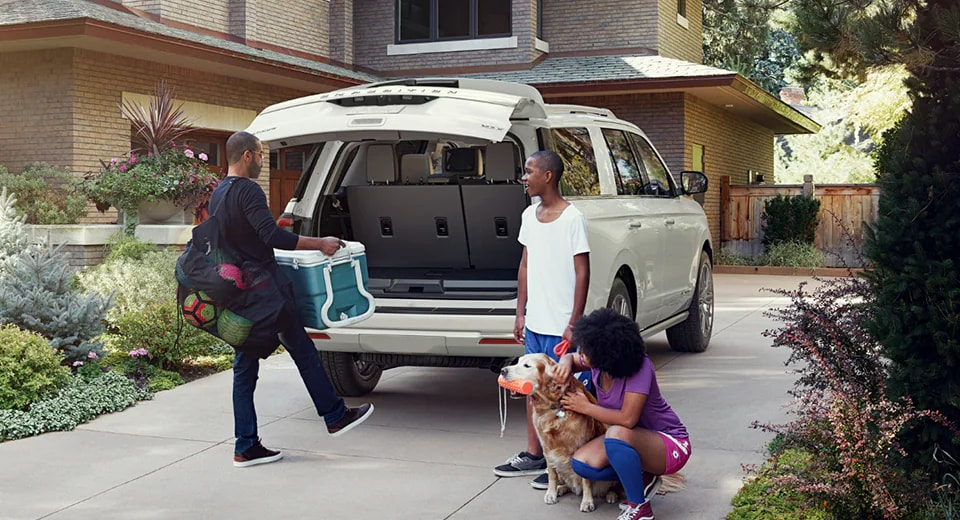
With summer officially arriving this month, it’s time to think ahead on your upcoming West Michigan adventures! Whether that means spontaneous trips to the lakeshore, long weekends at a campground, or even a week up in the UP, there are easy things you can do to get your vehicle ready. Check out our quick summer adventure guide for tips on keeping your vehicle clean and saving money on gas!
Tips For Keeping Your Vehicle Fresh and Clean
One of the biggest challenges on summer road trips is keeping your vehicle interior free of sand and dirt, especially with kiddos in the back seat. We found a few neat tricks you can try out this season:
Use a plastic, resealable cereal container as a wastebasket: Take the entire lid off, fit a plastic grocery bag over the container, and replace the lid. These often have a small, resealable opening on the lid to allow you to pour cereal without removing the whole top. You can use this opening as the “lid” of the trash can. You can store extra grocery bag “liners” at the bottom of the container too.
Bring a laundry basket with you to the beach: The best way to keep sand out of your floor mats, upholstery, and everywhere else is to leave most of it at the beach. Once everyone changes back into street clothes, throw everything with sand on it into a plastic laundry basket and give it a good shake. Most of the sand will come out of the sides, and the mess will be contained until you arrive back home. See it in action here!
Bring baby powder and a washtub for extra sand removal: Getting sand out of clothes is half the battle. Sand stuck to your skin will inevitably end up all over the place too. Use baby powder to absorb moisture on your skin and the sand will fall right off. You can also bring along a plastic washtub as a portable foot bath before getting in the vehicle!
Invest in All-Weather Floor Mats: These aren’t just for slushy snow! When you get home, you can easily pull these out of your vehicle and shake the sand, dirt, and debris right off. You can also get cargo liners made with the same material to go under that laundry basket of sandy clothes in the trunk! If you have a Ford or Mazda, Borgman provides mats that are tailor-made for your vehicle too.
Mitigate that “lake water” or “wet dog” smell: When rolling the windows down isn’t enough, you can make your own air fresheners that fit right in the cupholders! If you have extra candles around the house, another “summer car hack” we saw involves poking holes in the top of a mason jar with a hammer and a large nail, then putting chunks of leftover candle wax inside. After your vehicle heats up in the summer sun, the wax melts – filling your vehicle with a fresh scent.
How To Maximize Your Fuel Efficiency
With gasoline prices soaring, you might be wondering how to spend less on fuel for your trip. Some of the things you can do involve making sure your vehicle is running its best, but others are habits you can adopt to curb your fuel consumption on long trips.
Make sure your tires are inflated to spec: Tires low on air will form more friction with the ground, meaning they require more force to turn. While on the surface this sounds like a good thing, it also has a negative impact on your handling and will, over time, damage your tires. Make sure your tires are inflated to the pressure marked on the driver’s side door sill for optimal safety and fuel efficiency.
Turn on your fuel economy display: For vehicles that have one, your current estimated miles-per-gallon display will show you how much fuel you’re using from moment to moment. While it’s important to keep your eyes on the road, having this info plainly visible at all times will help you see when you’re using the most fuel. Valuable information if you’re being fuel-conscious!
Avoid “jackrabbit” starts and stops: Your vehicle uses the most fuel when moving from a stop. Getting up to speed gradually will consume less fuel than taking off like a rocket. On the flip side, allowing your vehicle to coast for a while before coming to a stop saves on fuel too.
Slow down: If you plan your trip and allow enough time for travel, what’s the rush? Once you go faster than about 70mph, your fuel economy will suffer. Try to keep a steady speed or better yet, set the cruise control. This feature gives your pedal foot a break on longer highway trips and saves fuel in the process. Just be sure to take on hills (up and down) manually for the best performance.
Avoid “Fuel-Saving” Products: When you’re on a mission to save fuel, you may see devices (or worse, fuel additives) that you can use to boost your mpg. The vast majority of these do absolutely nothing for fuel economy and could damage your vehicle, and the ones that do work only offer minimal savings. We’re willing to bet the cost of these will not be offset by your actual fuel savings, so it’s best to protect your vehicle and avoid them altogether.

Get a “Pre-Flight Check” at the Borgman Service Center in Grand Rapids, MI
While there are things you can do to ensure a successful summer trip, there are other things best left to the experts. The pros at the Borgman Service Center know exactly what to look for before you set out and will ensure your vehicle is in tip-top shape for the trip.
For example, if you’re looking to save on fuel, we can check to make sure your air intake and filter are clear, your fuel/air mixture is correct, and more. The EPA states that failed oxygen sensor can reduce your fuel efficiency by up to 40% or more, and we have the experience to detect issues like this as well.
Need to make an appointment? Use our easy Online Scheduler to plan your visit, then head over to our Service Coupons for the latest offers and rebates. If you have any questions, feel free to Contact Us. We’ve been keeping West Michigan moving since 1960, and it’d be our pleasure to serve you. Come see why we’re the Best in the West!

Did you know there are parts of your powertrain and suspension that are designed to be replaceable? Aside from the obvious ones like shocks and struts, there are a number of components that all work together to power the wheels, keep your vehicle stable, and keep your steering tight and predictable. These include your axles, tie rods, sway bar, and wheel hubs. If you plan on hitting the road in West Michigan this summer, it’s worth having the Borgman Service Team look at these rugged but critical components first.
We typically don’t think about these parts until there’s an issue, but they are all under stress every time you use your vehicle and they do eventually wear out. West Michigan drivers especially need to keep these parts in mind, as our roads are not as smooth as they are in other parts of the country. This will wear these parts out faster than the national averages you see online. Today, we’ll discuss what your axles, tie rods, sway bars, and wheel hubs are, what they do, and when you should replace them at the Borgman Service Center.
What Do Axles Do and When Do They Wear Out?
Constant Velocity Axles and Joints, since the part performs both functions, have a relatively simple job. They transfer power in the form of rotation from the transmission to the wheels. Also known as CV Axles or Half Shafts, they consist of two solid metal couplers on either end with a rubber boot covering each joint. This keeps lubricating grease inside the joint while keeping dirt, water, and contaminants out. These joins allow the transmission to be positioned higher than the wheels and allow the axle to bend when the wheel travels over bumps or turns.
CV Axles do not need to be replaced very often at all, in fact, it’s far more common to replace them both when one starts to fail rather than on a schedule. Signs that your vehicle’s axles are wearing out include seeing dark, sticky grease on the inside of your tires, and a scraping, clicking sound when you take tighter turns. However, the latter can also be caused by a failing wheel hub bearing (more on that later.) Your passenger side CV Axle is likely to wear out first since right turns are taken more sharply in the USA and are more common. If you’re concerned that yours is wearing out, check the inside of that tire first.
What Are Tie Rods? Why Do I Need Them Inspected?
Just above your axles (in most cases) are your tie rods. Their job is to connect the wheel hubs to the steering system, which translates the turning motion of your steering wheel into a side-to-side motion – pulling on one and pushing the other. There are inner and outer tie rods, and the inner ones are covered in a protective rubber boot, much like an axle. Like the other parts mentioned here, they’re very durable and don’t have a strict maintenance schedule.
However, when your tie rods fail, you’ll be unable to steer. Signs that they are wearing out include “play” or vibrations in the steering wheel, excessive tire wear with sometimes bizarre patterns or sounds clunking while turning. One of the experts at the Borgman Service Center will be able to determine if it’s time for a replacement.
What Is A Sway Bar, What Does It Do?
If you drive a smaller vehicle, chances are you don’t even have a sway bar. Also called an anti-roll or roll bar, sway bars are rigid metal beams bent to whatever needed shape and are typically only found in larger vehicles like pickup trucks or cargo vans. These act as a spring or lever when under load, and they work to counteract centripetal force when making turns – ensuring all of the tires remain flat on the pavement.
When sway bars begin to fail, you’ll start to notice your vehicle getting more and more unstable when taking turns. You may also hear something clanging or rattling around in your engine bay. Generally, if you’re experiencing steering or stability issues, this will be one of the first things that are inspected.
When Do I Need To Replace Wheel Hubs & Bearings? What Do They Do?
There are many different types of wheel hubs and bearings, but their primary jobs are the same: keep the wheels spinning smoothly. Wheel hubs are just that: a place for the suspension, brakes, axles, steering, and the wheel itself to all bolt together. In the center, between the threaded posts your wheel bolts onto, you’ll see a spindle that connects to the axle. This part turns, which then turns the posts and the wheel, and the bearings keep this motion nice and smooth – reducing friction and noise.
Nowadays, most wheel bearings are non-serviceable, meaning if your bearings wear out, the whole hub needs to be replaced. When your wheel bearings begin to fail, you may notice a grinding sound, or a sound akin to a ping-pong ball spinning around in a plastic cup coming from the wheels. As the situation worsens, your wheel will start to wobble when rotating, eventually falling off altogether.
The easiest way to check if you need a new wheel hub is to raise the vehicle safely on jack stands, grab the top and bottom of a driven wheel, and see if you can shake it as hard as you can. If you’re able to move the wheel around, you need new bearings. If there’s barely any movement, you can also put the vehicle in neutral (make sure your non-drive wheels are chocked or the vehicle is completely raised) and spin the wheel. This lets you listen for odd sounds from the hub without the engine drowning them out. If you hear anything above a whisper, bring your vehicle in for an inspection at the Borgman Service Center.

Enjoy the West Michigan Summer Worry-Free with the Borgman Service Center
Before hitting the road to adventure this summer, Schedule an Appointment with the Borgman Service Center. Our team will ensure your vehicle is running in tip-top shape for the summer months or your next vacation. This is in addition to making sure you understand the work to be performed, and how critical the part is to the life and safety of your vehicle.
To get started, use our easy Online Scheduler to make your appointment, then check out our latest Service Coupons. If you have any questions, please feel free to . Come see why we’re the Best in the West!
Connect with us


- March 2026
- January 2026
- May 2025
- April 2025
- March 2025
- February 2025
- January 2025
- December 2024
- November 2024
- October 2024
- August 2024
- July 2024
- June 2024
- May 2024
- April 2024
- April 2023
- March 2023
- February 2023
- January 2023
- December 2022
- October 2022
- June 2022
- May 2022
- April 2022
- March 2022
- February 2022
- January 2022
- December 2021
- November 2021
- October 2021
- August 2021
- July 2021
- June 2021
- May 2021
- April 2021
- March 2021
- February 2021
- January 2021
- December 2020
- November 2020
- October 2020
- September 2020
- August 2020
- July 2020
- June 2020
- May 2020
- April 2020
- March 2020
- February 2020
- January 2020
- December 2019
- November 2019
- October 2019
- September 2019
- August 2019
- July 2019
- June 2019
- May 2019
- April 2019
- March 2019
- February 2019
- January 2019
- December 2018
- November 2018
- October 2018
- September 2018
- August 2018
- July 2018
- June 2018
- May 2018
- April 2018
- March 2018
- February 2018
- January 2018
- December 2017
- November 2017
- October 2017
- September 2017
- August 2017
- July 2017
- June 2017
- May 2017
- April 2017
- March 2017
- February 2017